
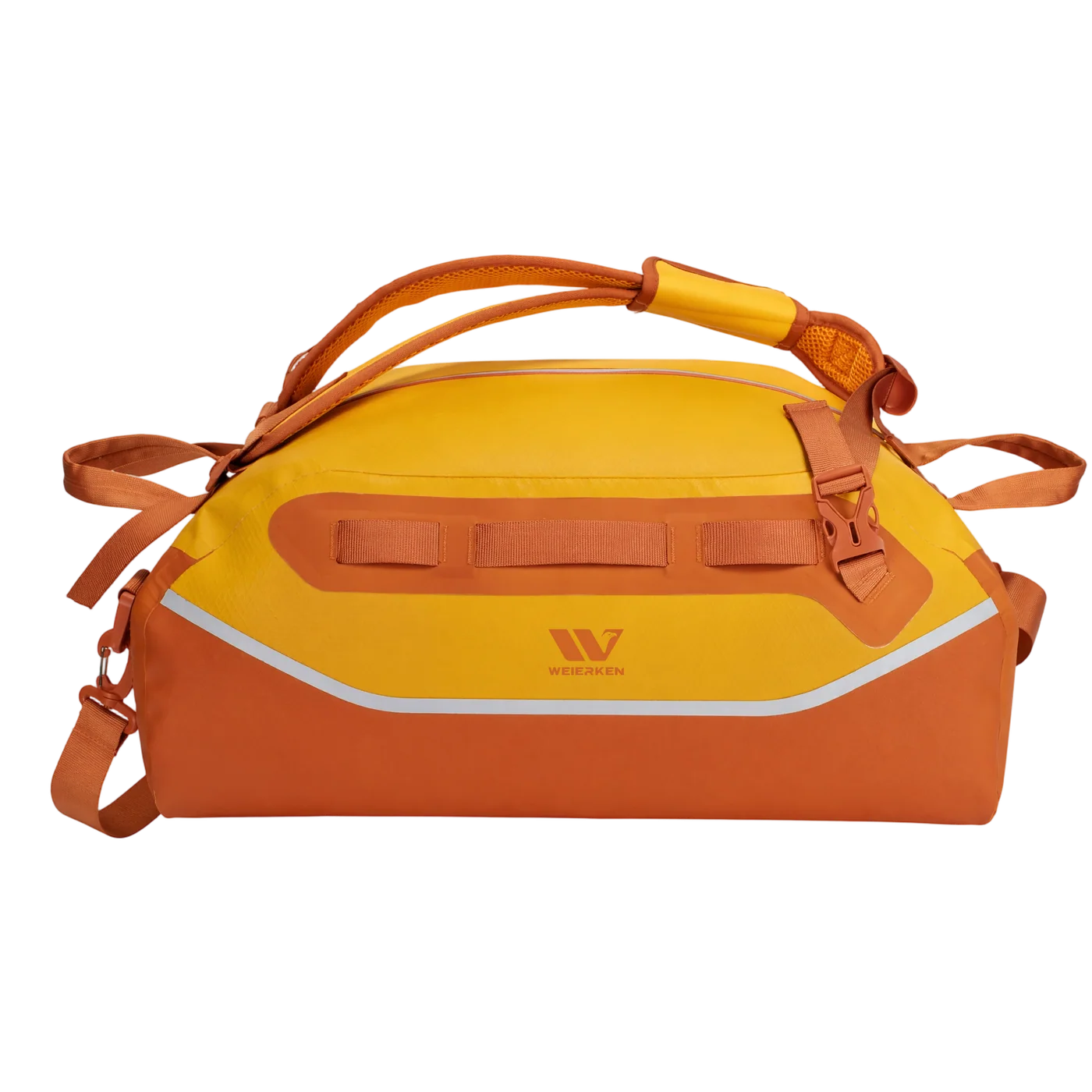
Choose a travel duffel around the largest rigid item’s loading path, then check the remaining soft load. Liters describe capacity, but they do not show the narrowest point of an opening, the space required to rotate equipment or the room needed to close the bag without forcing it.
For a waterproof bag ODM project, a platform such as Weierken’s 70L W17-26SS travel duffel can be a starting reference. The current product description identifies a large main compartment, backpack straps and handles. Whether a specific equipment case fits still needs a dimensional and physical review. A nominal 70L label is not a fit guarantee or airline acceptance statement.
1. Measure the item as it will actually be packed
Include rigid handles, protective feet, hinges and any cover that remains attached during loading. Note whether the item can be turned sideways and whether its contents must remain upright. The useful envelope may therefore be larger than the dimensions of the main box alone.
Next, identify the opening’s clear width, clear length and the shape of its ends when fully open. Do not substitute the outside bag dimensions for those measurements. A flexible body may accommodate an object after it is inside while the same object cannot pass the closure. The bag measurement and tolerance guide helps define repeatable measuring conditions.
2. Use a filled loading review instead of guessing from volume
This example is illustrative only. The dimensions below are not W17-26SS specifications and do not represent a completed sample test.
| Item or condition | Example brief | Review decision |
|---|---|---|
| Main equipment case | Rigid envelope 420 × 240 × 180 mm, including handle | Measure the clear entry and demonstrate the loading path |
| Orientation | Case must stay upright while being inserted | Do not approve a fit that requires tipping onto its side |
| Soft items | Two clothing bundles are packed after the case | Check access and closure without compressing the opening |
| End access | Case is removed by a user standing beside the bag | Record hand clearance and the required rotation |
| Closure | Close using the intended operating movement | Reject a fit that depends on forcing the closure around the case |
A useful review photo shows the item at the narrowest part of the opening with a measuring reference. A photograph of a closed, full bag cannot establish how loading was achieved. Record any removed packing or folded handles so the result can be repeated.
3. Check the closure and carrying system around the load
After loading, move the closure through its normal path. Look for a rigid corner pushing into an end transition or a handle trapped under a flap. If the bag is intended to be carried as a backpack as well as by hand, confirm that the equipment position does not create an unacceptable contact point against the user’s back.
Carrying handles and external loops also need a defined role. A convenient-looking loop is not automatically a rated lifting point. Discuss the intended total load and the review method for the complete carrying system. See the travel-duffel handle-layout guide for handle placement, while keeping this loading-envelope decision in its own record.
4. Compare a wider opening with a larger body
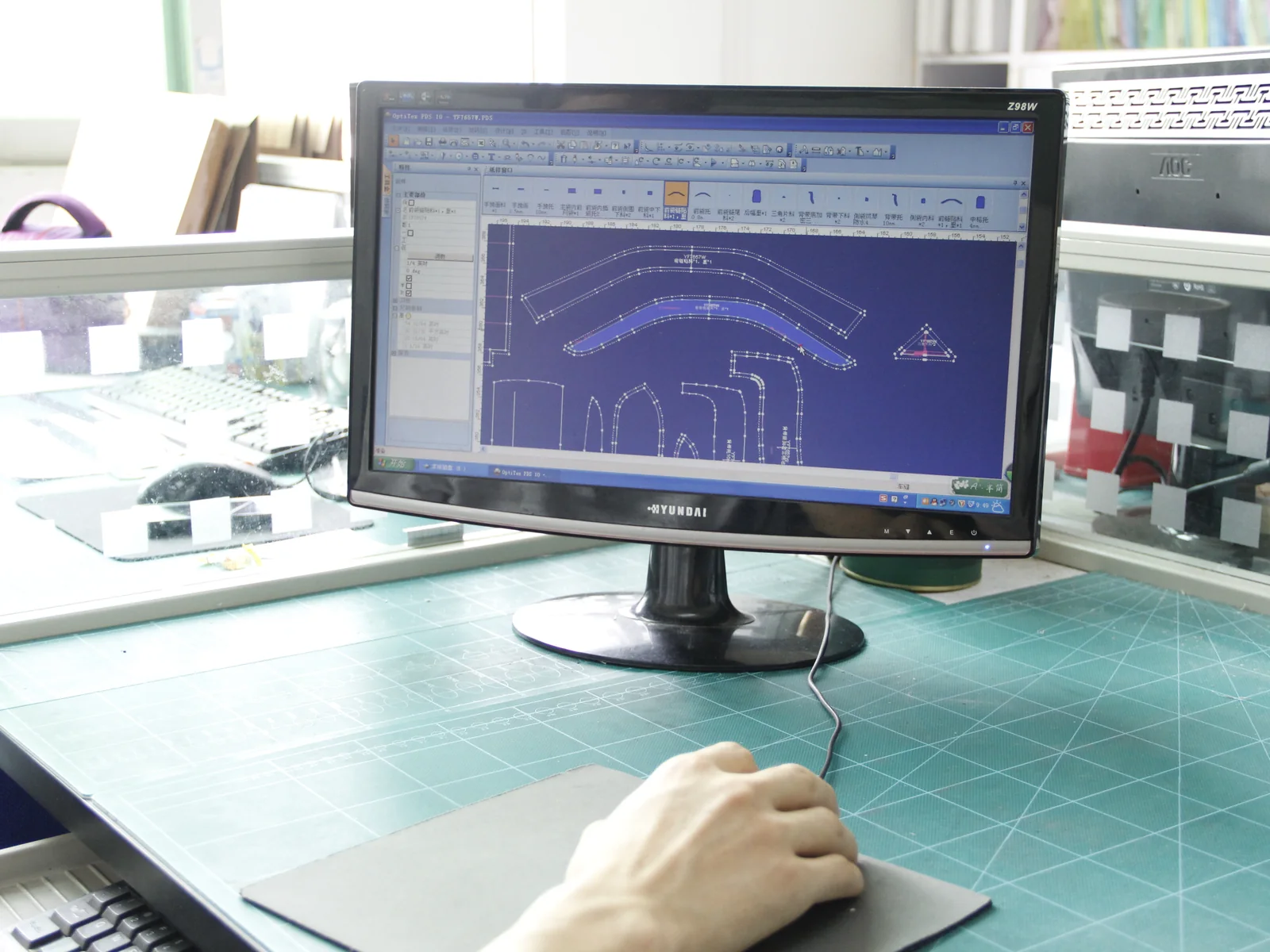
If the rigid case does not pass through the entry, simply increasing the body depth may add unused volume without solving the obstruction. Alternatives include a changed opening length, different end geometry or another closure format. Ask the factory which surrounding panels and components would change with each option.
Compare the options using the same packed set. Record access, closure operation, carry arrangement and external dimensions after packing. A smaller, well-matched format may be more useful than a larger bag that is difficult to handle. Any material or closure change needs a fresh review of the intended exposure; do not assume the previous construction’s results still apply.
5. Preserve the fit evidence for repeat orders
Keep the equipment envelope, loading sequence, sample revision and photographs in the approved specification. If the customer’s case supplier changes, compare the actual new case before repeating the bag order. A small increase at a handle or hinge can matter more than a change in stated case volume.
Connect the loading record to the reorder specification and waterproof bag closure specification. For travel use, confirm any carrier restrictions independently for the actual packed dimensions and weight; a bag’s marketing name cannot settle those requirements.
Frequently asked questions
Will a 70L travel duffel fit every object smaller than 70 liters?
No. A rigid object’s dimensions, the entry shape and the required insertion direction determine whether it can be loaded. Use a physical fit review with the actual item or a representative rigid gauge.
Is increasing the duffel body size always the best solution?
No. If the opening is the bottleneck, extra depth may not help. Compare opening geometry, closure format and body dimensions against the same equipment set.
What if the rigid equipment changes after sample approval?
Compare its full envelope, including handles and protrusions, with the approved item. Repeat loading and closure checks where the dimensions or required orientation have changed.
Send a focused project brief
Send dimensions and photographs of the largest rigid item, its required orientation and the complete travel load. This gives the opening review a concrete starting point. Request a Weierken manufacturing review with your company, product format, quantity, destination market and drawings. MOQ, sampling arrangements, pricing and delivery timing must be confirmed for the actual specification.
From brief to sample
Build the right bag for your collection.
Share the intended use, product format, quantity and destination market. Weierken can review the construction and sampling requirements with your team.
Discuss your bag project Explore OEM & ODM