
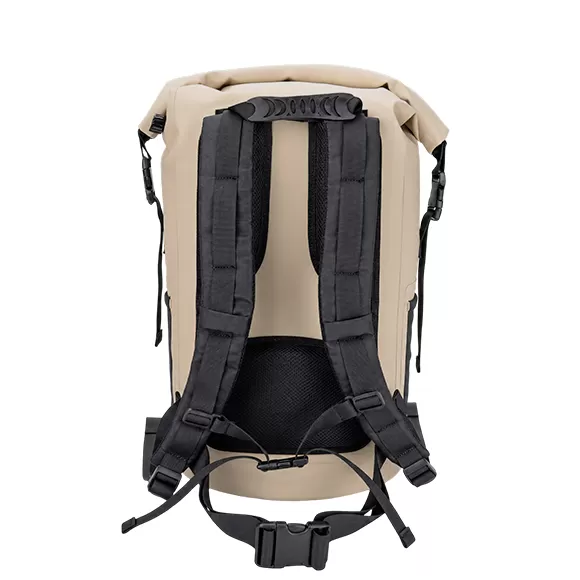
Webbing can match the approved color swatch and still require a separate review for color transfer. Shoulder straps contact clothing, while internal straps may touch a light-colored liner or container. A custom bag purchasing brief should distinguish shade approval from performance under rubbing, moisture and the intended care routine.
List the contact pairs
Identify which webbing touches clothing, skin-contact areas, coated panels or the inside liner. Note light-colored contact surfaces and the intended use conditions. A dark strap against a pale shirt creates a different review priority from an isolated decorative tab.
Record the webbing material, color reference and supplier component code where available. Do not treat a visual color match as evidence that two webbings share the same dyeing, finishing or performance.
Specify the test question, not just a pass label
Colorfastness to rubbing assesses transfer under defined conditions; dry and wet rubbing are not interchangeable descriptions. SGS lists rubbing and other colorfastness assessments separately, and ISO 105-X19 identifies dry and wet methods within its scope. The buyer or laboratory should select the method appropriate to the actual material and requirement.
State which material and color are being evaluated, the contact surface and acceptance criteria. Do not invent a universal required grade or claim a whole bag is approved because one unspecified strap was checked.
Review the finished arrangement
Inspect the strap where it bends around buckles, passes through adjusters and rests against a pad. A component-level report may not answer every question about the assembled bag. Review whether another material, printed mark or coating changes the relevant contact condition.
If the buyer has already observed staining, photograph both the strap and affected surface before cleaning. Include moisture, wear and cleaning history. A useful report distinguishes the appearance of the strap from transfer onto another material.
Control changes in color and supply
Link the approved result, if obtained, to the component, color and sample scope. Ask whether a new color or supplier requires an additional review rather than extending the original approval automatically. Keep the visible shade standard and performance record as separate files.
For bulk orders, identify how the component batch is traced to the production release. That makes a later investigation more precise than asking the factory whether the straps were the usual black webbing.
Purchasing worksheet
Use this as a project worksheet, not a completed test report. Swipe the table on a small screen.
| Requirement | Record | Do not substitute |
|---|---|---|
| Shade | Approved reference and viewing conditions | For rubbing performance |
| Transfer | Material, color, method and criteria | A vague colorfastness pass |
| Traceability | Component and production batch | An unrelated sample report |
Buyer FAQs
Does matching a color swatch prove colorfastness?
No. Shade and resistance to color transfer are different review items.
Can one black-webbing report cover all colors?
Not automatically. Check the tested material, color and applicable scope before extending an approval.
Explore our OEM and ODM development alongside the project worksheet below.
Prepare your Weierken project brief
Send the strap and contact-surface details, color references and intended conditions. Weierken can help organize the component brief; any performance claim must match the applicable evidence.
Related guidance: color approval, material traceability. Send your project details to Weierken.
Further technical reference: SGS colorfastness testing overview. Reference information is not a test result or certification for a Weierken product.
From brief to sample
Build the right bag for your collection.
Share the intended use, product format, quantity and destination market. Weierken can review the construction and sampling requirements with your team.
Discuss your bag project Explore OEM & ODM