
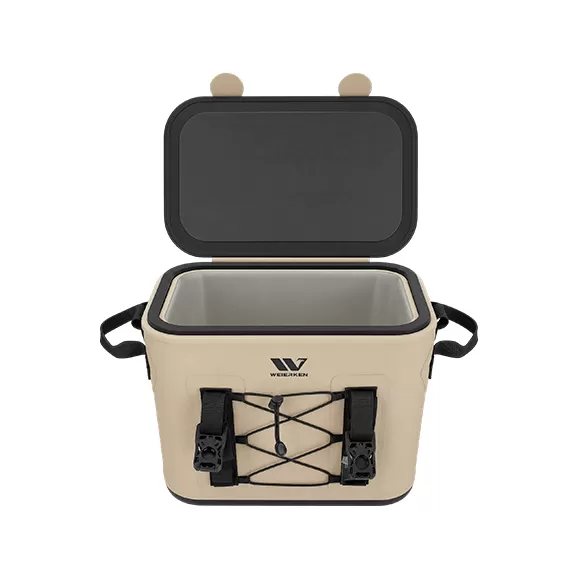
A wholesale cooler bag range should give buyers clear reasons to choose between models. Adding sizes and colours can make a catalogue look broader while dividing the opening order across too many similar items. For a distributor or retail brand, the first question is not “How many designs can we list?” but “Which purchasing occasion does each design serve?”
Weierken is a manufacturing and custom-development partner; this guide does not promise ready stock, mixed-case availability or a universal MOQ. It shows how a wholesale buyer can prepare an assortment brief before discussing the actual models, quantities and commercial terms with a factory.
Give every model a distinct buying occasion
Describe the user and purchase occasion before selecting capacity. A compact lunch cooler, a hands-free day-trip backpack and a larger family picnic cooler may serve different needs. Three bags with slightly different external dimensions but the same carrying method and layout may be harder for a buyer to distinguish.
Write one sentence for each proposed model: who uses it, what it holds, how it is carried and why it belongs in the range. Then test the sentence against the actual bag. An attractive photograph does not prove that the bag fits the named containers, works with the planned coolant or has the intended access.
Browse the Weierken product range to select references, then use the container-fit planning guide to evaluate them. Litres and can counts are useful catalogue descriptors, but they should not replace a load and use comparison.
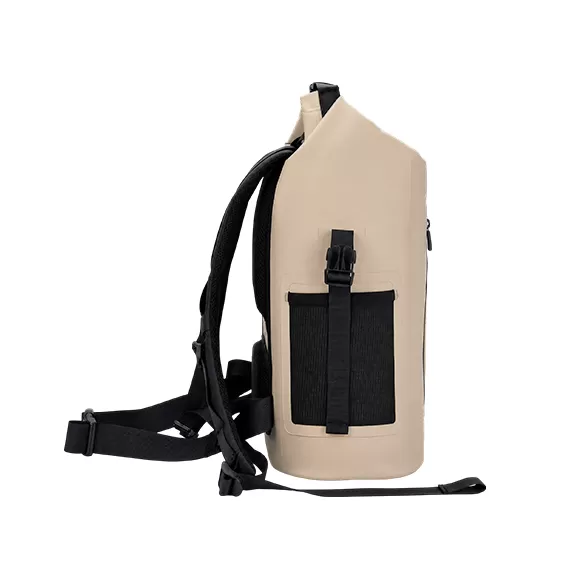
A filled example: three roles rather than six similar bags
Illustrative assortment worksheet: the example below contains three hypothetical range roles and suggested review priorities. It is not a finished Weierken collection, sales forecast or stock offer. Use the actual customer, market and sample results to select models.
| Range role | Buyer occasion | Feature to demonstrate | Question before adding the model |
|---|---|---|---|
| Compact everyday cooler | A short routine with a small defined load | Easy packing, access and convenient carrying | Does it fit the customer’s normal container set? |
| Hands-free day-trip cooler | Walking, fishing or travel with other gear | Carry comfort and usable external access | Can the packed bag be carried comfortably in the intended routine? |
| Shared-outing cooler | A larger group load or more bulky items | Loading space, support and carrying options | Is this genuinely a larger-use occasion rather than a duplicate of the core model? |
Now compare what the range does not cover. If customers primarily buy lunch products, a specialist fishing model may be less urgent than a better everyday configuration. If the channel focuses on outdoor equipment, a compact promotional tote may not fit its positioning. Leave a model out when its role is unclear; a smaller, understandable range can be easier to evaluate.
Count variants before splitting the opening order
Colours, sizes and channel-specific packaging can multiply the number of sellable variants. Three models in two colours create six model-colour combinations. Adding a third colour creates nine. If the total bag quantity stays unchanged, the average quantity per combination falls; this arithmetic does not prove that a factory can produce each split.
| Option | Model-colour combinations | Example total bags | Average per combination |
|---|---|---|---|
| 3 models × 2 colours | 6 | 1,200 | 200 |
| 3 models × 3 colours | 9 | 1,200 | About 133; the actual split needs whole quantities |
| 3 models × 2 colours × 2 pack versions | 12 selling variants | 1,200 | Bag manufacturing and pack allocation need separate review |
The figures are examples, not MOQs. A printed fabric, a custom colour or a model-specific component may set a different purchasing constraint. Ask which variants share materials and which do not. Our MOQ and colour planning guide explains why a total collection quantity is not automatically the quantity basis for every model.
Separate the manufactured bag from its selling pack. One bag configuration may use different labels or instructions for two markets, while another requires a physical design change. Keep that distinction visible before assigning product codes or estimating inventory.
Review presentation and handling for the actual channel
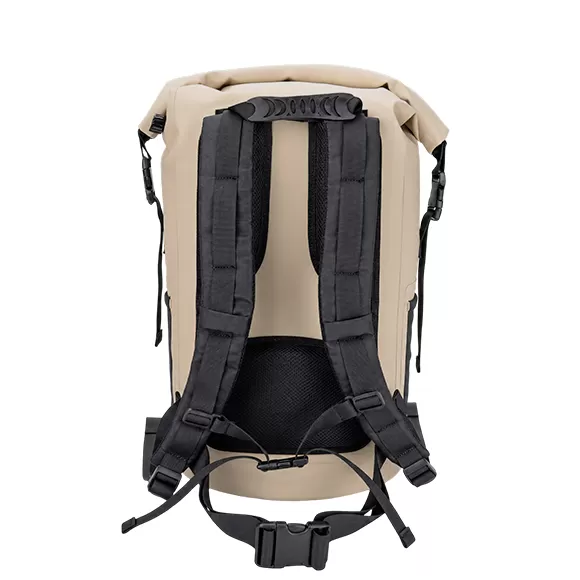
A showroom sample, an e-commerce parcel and a retail shelf create different presentation requirements. Identify the product information a buyer needs before purchase and the pack condition expected on arrival. For an online listing, prepare accurate photographs of the opening, liner and carrying features. For retail, discuss how the bag is displayed, labelled and handled without obscuring important features.
Make a channel checklist covering product name, model identifier, approved claims, included accessories, care instructions and packing format. Follow the retailer’s product-identification requirements and use authorised identifiers where required. Do not invent barcode numbers to fill a mock-up. Label and barcode decisions are covered further in our barcode placement guide.
Distinguish three possible supply discussions: purchasing existing available goods, adapting an existing construction, or developing a custom product. They can have different feasibility and order requirements. A competitor’s published stock or custom terms are not a Weierken offer. Ask for the actual route and availability for each selected reference.
Plan replenishment before expanding the range
Give each model a review date and a reason to keep, revise or remove it. Use real sales, return reasons and buyer questions when available. Without that feedback, adding another similar bag can increase complexity without solving a demonstrated gap.
For repeat orders, retain the approved product and packaging revision, the colour reference and the actual variant split. If the next order changes a model’s role or load, reopen the relevant sample questions rather than treating it as a routine reorder. Keep seasonal demand estimates separate from confirmed purchasing quantities.
A useful enquiry to Weierken lists the sales channel, destination, range roles, selected catalogue references, opening quantity by model and colour, intended branding and launch window. Include what is fixed and what is open for recommendation. This gives the OEM and ODM team a clearer basis for discussing a manageable range instead of quoting a large list of unrelated designs.
Frequently asked questions
How many cooler bag models should an opening wholesale range contain?
There is no universal number. Start with distinct customer needs and a quantity plan that can support the chosen variants. Add models when they fill a clear gap supported by customer or channel evidence.
Can we mix different models to meet one MOQ?
Do not assume a combined total applies. Ask for the requirements of each model, colour, material and packaging choice, and identify any genuinely shared components.
Does Weierken offer every catalogue model from ready stock?
A catalogue reference is not a stock confirmation. Ask for current availability and the appropriate production or customisation route for the specific model and order.
Send Weierken your channel, model shortlist and opening-order split to discuss a focused cooler bag range.
From brief to sample
Build the right bag for your collection.
Share the intended use, product format, quantity and destination market. Weierken can review the construction and sampling requirements with your team.
Discuss your bag project Explore OEM & ODM