
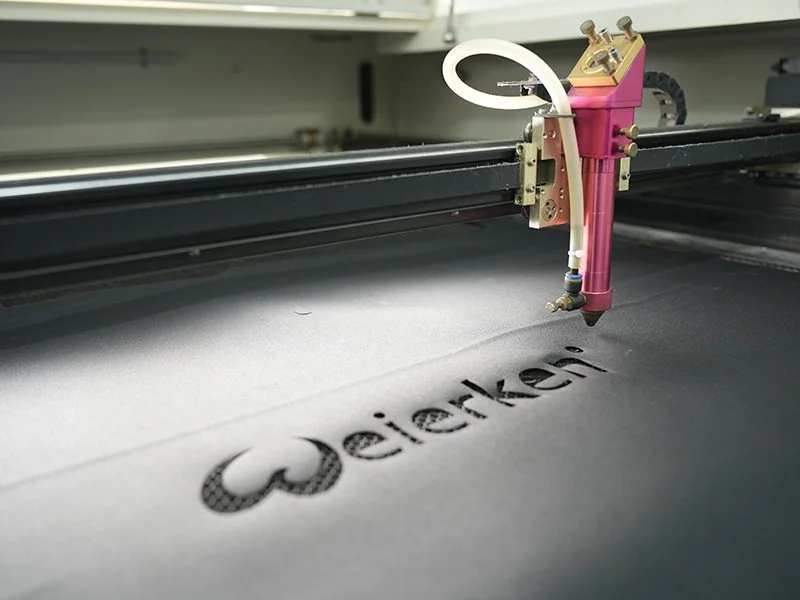
Artwork that looks centered on a flat file may be folded, interrupted or obscured on a finished TPU-coated bag. A factory-ready print file needs to show how the panel is cut and assembled. For a custom waterproof bag, coordinate artwork with the construction drawing before approving color or paying for a new print setup.
Put artwork on the correct panel revision
Use the approved panel outline and identify the finished orientation. Mark the cut edge, intended fold, seam or weld area, and any attached pocket or reinforcement. Distinguish construction guidance from lines that are actually meant to print.
Do not assign a universal safe distance from every weld or fold. Required clearances depend on the specific process, material and layout. Ask the development team to mark the proposed artwork boundary for the selected construction.
Check visibility in the assembled product
Show the logo or graphic on open, closed and carrying views. A flat panel can leave a mark behind a buckle or across a rolled opening. If part of the artwork must remain readable, define that as a requirement instead of relying on a centered preview.
For repeating graphics, identify the priority: overall visual alignment, a complete symbol or a specific logo position. Those priorities can require different cutting and placement controls. Do not approve a repeat pattern from a small swatch alone.
Review material and process compatibility
Provide the intended print colors, coverage and surface effect. Ask how the artwork is applied and what sample checks are proposed for the actual coated fabric. A print process suitable for one material should not be transferred to a different coating without review.
Keep adhesion, appearance and flexing observations separate from finished-bag protection claims. An approved print sample does not prove that a seam is watertight or that the whole bag meets a particular exposure rating.
Release one print-ready package
Include the artwork version, color reference, marked panel drawing and assembled sample photos. Record any positioning tolerance agreed with the factory and identify who approves the final sample. Remove obsolete drafts from the active production package while retaining them in the project history.
When a panel size or closure position changes, recheck the artwork. Reusing the same logo file does not mean the old placement approval remains valid on a revised bag.
Purchasing worksheet
Use this as a project worksheet, not a completed test report. Swipe the table on a small screen.
| File element | Define | Approval evidence |
|---|---|---|
| Construction overlay | Cut, fold and joining areas | Marked panel drawing |
| Visible artwork | Closed and carrying orientation | Assembled sample photo |
| Production release | Version, color and position | Approved print package |
Buyer FAQs
Is a logo centered on a flat panel always centered on the finished bag?
No. Folds, closures, pockets and assembly can change the visible area.
Can one print approval cover every TPU-coated fabric?
Do not assume so. Review the actual substrate, process and required performance when the material changes.
Explore our waterproof bag collection alongside the project worksheet below.
Prepare your Weierken project brief
Send editable artwork, the intended product view and any must-remain-visible areas. Weierken can review placement against the panel and construction before the artwork is released.
Related guidance: logo artwork preparation, TPU fabric specifications. Send your project details to Weierken.
From brief to sample
Build the right bag for your collection.
Share the intended use, product format, quantity and destination market. Weierken can review the construction and sampling requirements with your team.
Discuss your bag project Explore OEM & ODM