
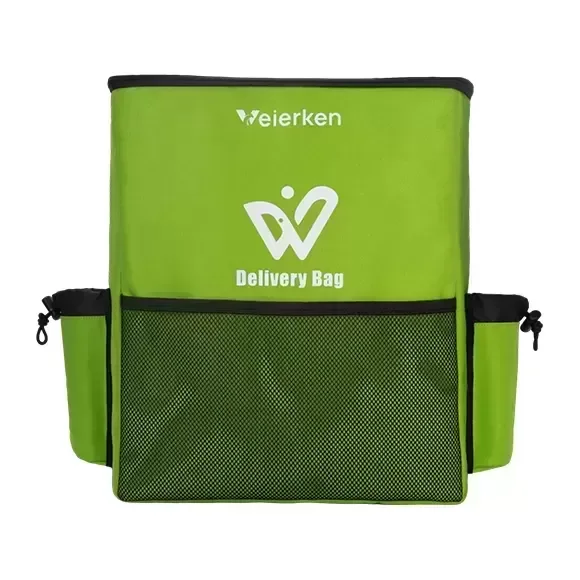
A reflective panel is useful only if its location is relevant to how the bag is carried and used. Logos, straps, carrier frames and external pockets can cover a panel that looks prominent in a flat drawing. For a custom delivery bag, review visibility-related features on the assembled bag without turning them into an unsupported safety certification claim.
Define the use and any required standard
State whether the buyer wants a decorative reflective accent, a fleet-identification feature or a product that must meet a specified visibility requirement. These are different briefs. If a standard or customer protocol is required, identify it with the compliance team before the design is finalized.
Do not describe a bag as certified protective equipment because one component has a supplier report. The scope of a material result and the requirements for a complete product must be checked separately.
Mark what remains visible in normal use
Review front, rear and side views with the bag worn or fitted to the intended carrier. Include the rider’s clothing, shoulder straps and external accessories where they can obscure the proposed location. A logo occupying the same space may force a choice between brand area and panel area.
Photograph both normal loaded shape and any collapsed condition relevant to use. A soft panel may fold or turn away when the bag is partly filled. A flat artwork proof does not show those positions.
Coordinate application with maintenance
Ask how the reflective component is sewn, bonded or otherwise attached to the selected fabric. Review edge finishing, flexing and the proposed cleaning routine. A component choice that looks good when new still needs a suitable durability scope for the fleet’s use.
Avoid specifying an arbitrary washing or rubbing result without a method and acceptance criteria. If testing is required, identify the material, attachment process and sample version, so the result applies to the design being purchased.
Use accurate sales and instruction wording
Keep the approved placement drawing and any applicable report together. State only the performance and scope supported by the evidence. Do not imply that adding a panel makes a rider visible from every direction or replaces other road-safety measures.
For a logo or pocket revision, check whether the panel remains exposed. A later branding change can defeat the original placement plan without changing the reflective material itself.
Purchasing worksheet
Use this as a project worksheet, not a completed test report. Swipe the table on a small screen.
| Decision | Define | Approval check |
|---|---|---|
| Purpose | Accent, identification or specified requirement | Compliance scope agreed |
| Location | Carrying and carrier positions | Assembled views |
| Durability | Material, attachment and care | Applicable sample or test record |
Buyer FAQs
Does a reflective-material report certify the complete bag?
Not automatically. Check the report scope and any complete-product requirements.
Can a logo be placed over a reflective panel?
Review the purpose and required visible area first. Do not assume that an overprint preserves the intended performance.
Explore our delivery bag manufacturing alongside the project worksheet below.
Prepare your Weierken project brief
Send the fleet use, proposed logo, carrying views and any required standard. Weierken can coordinate the feature with the bag layout; compliance claims need their own evidence.
Related guidance: branding artwork, carrying positions. Send your project details to Weierken.
From brief to sample
Build the right bag for your collection.
Share the intended use, product format, quantity and destination market. Weierken can review the construction and sampling requirements with your team.
Discuss your bag project Explore OEM & ODM