
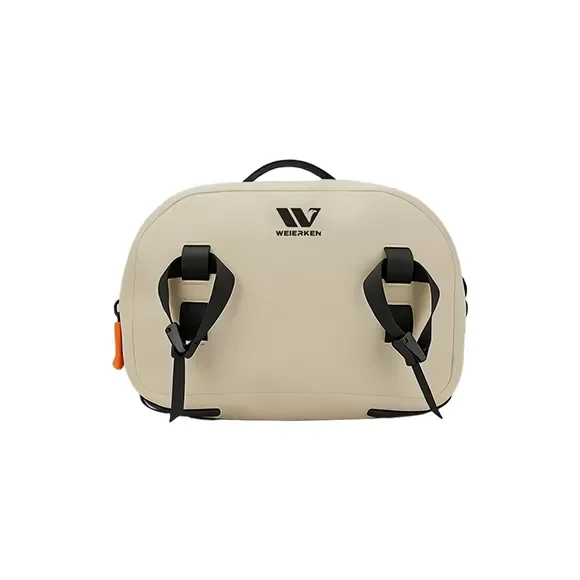
For custom fishing bag kneeling mat pocket, define the purchasing and acceptance boundary. A fishing bag pocket intended for a separate kneeling mat needs the actual folded accessory and use conditions in its design brief. State whether the buyer supplies the mat or requests it with the bag. The beige fishing bag photograph is a product-format reference; it does not establish a fitted pocket, mat availability or protective performance. Ask Weierken to confirm the actual proposed sample and supply boundary.
Define the accessory in its stored condition
Provide the nominated mat reference, folded format and sample where available. Distinguish a loose accessory from a panel integrated into the bag. Explain whether the mat is expected to be returned to the pocket after use and what condition must be considered in the sample review. Do not infer fit from a flat accessory drawing without identifying how the item will actually be stored.

Specify material and care requirements honestly
State the expected exposure and care information that the buyer needs reviewed. Ask the supplier which pocket material, closure and attachment are proposed. A pocket does not establish the mat’s cushioning, protective suitability or cleanliness after use. Keep any such requirement tied to the actual accessory and evidence. Do not treat the bag photograph or a conceptual compartment drawing as proof of a tested protective function.
Review access beside the other contents
Ask where the proposed pocket opens and how it interacts with tools, trays, handles and straps. Review the arrangement with the expected bag contents rather than an empty presentation sample alone. The schematic shows the separate folded mat and pocket interface; it does not certify clearance or capacity. Keep the actual sample observations and required changes linked to the buyer’s approved configuration.

Keep bag and accessory supply identifiable
Request separate confirmation of bag, pocket and mat scope, including any customer-supplied component. Provide quantity, destination, logo, packaging and target dates. Identify the sample revision approved for storage and access. Ask which parts can be customized and how changes affect the actual offer, then retain the component references so a repeat bulk order is not based on an assumed accessory substitution.
Compare the proposed supply and its evidence
| Buyer need | Recommended product | Key specification | Why it matters |
|---|---|---|---|
| Nominated mat and folded format | Identified custom bag configuration | Order-specific scope and responsible reviewer | Connects the record to the item being purchased |
| Pocket access and surrounding contents | Identified custom bag configuration | Order-specific scope and responsible reviewer | Makes an important comparison condition visible |
| Material and care requirement scope | Identified custom bag configuration | Order-specific scope and responsible reviewer | Separates observation from an assumption |
| Bag, pocket and accessory supply boundary | Identified custom bag configuration | Order-specific scope and responsible reviewer | Preserves the accepted delivery decision |
Best for defined industrial projects
Best for engineering teams, industrial purchasing managers and distributors preparing an identified custom bag order. Suitable for a project with a documented application, quantity, technical owner and acceptance procedure. Not suitable for inferring a universal equipment capability, fixed commercial term or verified order result from a catalog image. Confirm the offered configuration and the project-specific evidence before approving production supply.
Buyer questions before requesting a quotation
What information should accompany the first RFQ?
Describe the application, destination, proposed configuration, quantity and target delivery date. Include the nominated mat and folded format and identify the person who owns technical approval. Send the relevant drawings, process information or specification revision when available. Ask the supplier to return a proposal that distinguishes confirmed requirements from assumptions, exclusions and options, so the industrial purchase can be reviewed against a clear scope.
Does a general catalog establish this acceptance requirement?
A general catalog provides product context and can help identify the family to discuss. It does not establish the pocket access and surrounding contents for the actual order. Ask the supplier to confirm the proposed arrangement and the evidence that will accompany it. Keep product identity, a requested feature, a completed demonstration and the final acceptance decision separate when assessing whether the requirement has been met.
Which documents should the buyer retain?
Retain the accepted technical offer, applicable configuration and revision identities, relevant inspection records and the delivery disposition. Preserve the material and care requirement scope together with any deviation and its review. The useful record connects an observation with the actual supplied item and requirement. An unrelated brochure, image or unconfirmed numerical claim should not replace the evidence specifically required for the project purchase.
Can the documentation and supply scope be customized?
Submit the requested documentation, packaging, identification or other supply change with the inquiry. Include the bag, pocket and accessory supply boundary and explain the intended use. Ask Weierken to confirm feasibility, quantity conditions and the effect on price or delivery in the actual proposal. Keep the agreed revision with the order rather than assuming that every requested customization is standard or already included.
How should technical approval and delivery be scheduled?
Close the technical scope, approval owner and outstanding questions before requesting a firm production commitment. Include the nominated mat and folded format, required quantity, destination and target arrival date. Distinguish document review, any agreed evaluation, production completion and transportation. This guide establishes no inventory position, minimum order or fixed lead time; the supplier must confirm those commercial conditions for the actual configuration and project.
Connect this review to the complete project specification
Describe the actual contents, intended use, destination market, proposed bag dimensions and expected carrying arrangement in the inquiry. Submit relevant component references, artwork and packaging requirements, and ask which details require a sample or technical review. A photograph establishes a useful product-format reference but does not confirm capacity, load limits, insulation performance or waterproofness for the proposed order. Those claims require the appropriate supplier evidence and agreed evaluation. Keep the reference sample revision distinct from a requested customization. State trial quantity, production quantity, logo needs and target delivery dates. If the contents, accessory or closure changes, identify the affected review and retain the revised sample approval. The interface described in this guide should be considered alongside materials, construction and the full project requirements before releasing an order for bulk manufacture.
Send an identified industrial supply inquiry
For a quotation, provide the application, project country, required quantity, technical specifications, relevant drawings, testing requirements, packaging or OEM needs and target delivery schedule. Identify the unresolved acceptance questions and the person responsible for reviewing the proposal. Contact Weierken with the project details to request an actual technical and commercial offer. Keep a proposed value clearly labeled until it is confirmed for the supplied configuration.
From brief to sample
Build the right bag for your collection.
Share the intended use, product format, quantity and destination market. Weierken can review the construction and sampling requirements with your team.
Discuss your bag project Explore OEM & ODM