
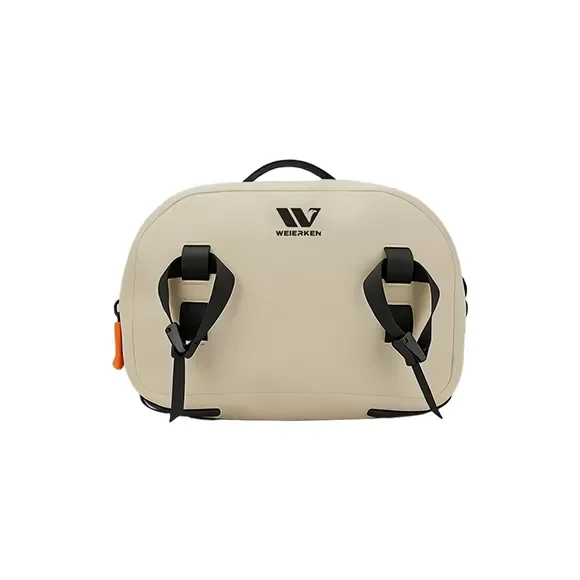
For fishing bag external webbing loop spacing, define the purchasing and acceptance boundary. Define external webbing-loop spacing with an identified reference and measurement basis when a fishing bag must interface with the buyer's accessories. Visible loops in a product photograph do not establish their actual pitch, clear opening or attachment strength. Ask the supplier to confirm the proposed layout and suitable sample review. Keep positional requirements separate from any carrying or retention claim that needs its own technical evidence.
Name the reference points before quoting
Record bag reference, external panel and the loop arrangement being discussed. Ask whether spacing means center-to-center pitch, a clear opening or another explicitly defined dimension. Preserve the agreed datum or sketch reference. A vague phrase such as standard loop spacing can lead different parties to measure different features. The beige bag photograph provides appearance context while the actual offered layout and applicable dimensions require supplier confirmation.

Retain measurements with sample identity
Agree who records the relevant dimensions and which sample revision the observations concern. Preserve the method-defined state and reference points so the supplier and buyer can interpret the same record. No universal tolerance or measurement force is prescribed here. Keep observed values, proposed requirements and accepted limits distinct. A sample discrepancy should be reviewed with the manufacturer rather than corrected by relabeling the dimension in a commercial spreadsheet.
Identify the accessory interface
Provide the proposed accessory reference and the function the external loops must support. Ask the responsible technical team to review the complete combination rather than assuming that similar-looking webbing is interchangeable. The schematic illustrates spacing and interface questions without establishing compatibility or a load limit. If the accessory changes, retain its identity and review the affected layout requirement before treating the existing bag sample as approval of the revised combination.

Specify the bulk layout clearly
Provide intended contents, accessory interfaces, material, bag dimensions, quantity, destination and required evaluation. Include an identified loop-layout proposal and ask Weierken to confirm manufacturing feasibility and sample scope. Keep branding and packing requirements with the same accepted revision. The final offer should state which dimensions and interfaces are confirmed, which remain optional and which functional claims need separate evidence before a production release.
Compare the proposed supply and its evidence
| Buyer need | Recommended product | Key specification | Why it matters |
|---|---|---|---|
| loop-layout reference and dimension basis | Identified custom bag configuration | Order-specific scope and responsible reviewer | Connects the record to the item being purchased |
| identified accessory interface | Identified custom bag configuration | Order-specific scope and responsible reviewer | Makes an important comparison condition visible |
| sample measurement and datum record | Identified custom bag configuration | Order-specific scope and responsible reviewer | Separates observation from an assumption |
| confirmed external-layout supply revision | Identified custom bag configuration | Order-specific scope and responsible reviewer | Preserves the accepted delivery decision |
Best for defined industrial projects
Best for engineering teams, industrial purchasing managers and distributors preparing an identified custom bag order. Suitable for a project with a documented application, quantity, technical owner and acceptance procedure. Not suitable for inferring a universal equipment capability, fixed commercial term or verified order result from a catalog image. Confirm the offered configuration and the project-specific evidence before approving production supply.
Buyer questions before requesting a quotation
What information should accompany the first RFQ?
Describe the application, destination, proposed configuration, quantity and target delivery date. Include the loop-layout reference and dimension basis and identify the person who owns technical approval. Send the relevant drawings, process information or specification revision when available. Ask the supplier to return a proposal that distinguishes confirmed requirements from assumptions, exclusions and options, so the industrial purchase can be reviewed against a clear scope.
Does a general catalog establish this acceptance requirement?
A general catalog provides product context and can help identify the family to discuss. It does not establish the identified accessory interface for the actual order. Ask the supplier to confirm the proposed arrangement and the evidence that will accompany it. Keep product identity, a requested feature, a completed demonstration and the final acceptance decision separate when assessing whether the requirement has been met.
Which documents should the buyer retain?
Retain the accepted technical offer, applicable configuration and revision identities, relevant inspection records and the delivery disposition. Preserve the sample measurement and datum record together with any deviation and its review. The useful record connects an observation with the actual supplied item and requirement. An unrelated brochure, image or unconfirmed numerical claim should not replace the evidence specifically required for the project purchase.
Can the documentation and supply scope be customized?
Submit the requested documentation, packaging, identification or other supply change with the inquiry. Include the confirmed external-layout supply revision and explain the intended use. Ask Weierken to confirm feasibility, quantity conditions and the effect on price or delivery in the actual proposal. Keep the agreed revision with the order rather than assuming that every requested customization is standard or already included.
How should technical approval and delivery be scheduled?
Close the technical scope, approval owner and outstanding questions before requesting a firm production commitment. Include the loop-layout reference and dimension basis, required quantity, destination and target arrival date. Distinguish document review, any agreed evaluation, production completion and transportation. This guide establishes no inventory position, minimum order or fixed lead time; the supplier must confirm those commercial conditions for the actual configuration and project.
Send an identified industrial supply inquiry
For a quotation, provide the application, project country, required quantity, technical specifications, relevant drawings, testing requirements, packaging or OEM needs and target delivery schedule. Identify the unresolved acceptance questions and the person responsible for reviewing the proposal. Contact Weierken with the project details to request an actual technical and commercial offer. Keep a proposed value clearly labeled until it is confirmed for the supplied configuration.
Connect this review to the complete project specification
Describe the actual contents, intended use, destination market, proposed bag dimensions and expected carrying arrangement in the inquiry. Submit relevant component references, artwork and packaging requirements, and ask which details require a sample or technical review. A photograph establishes a useful product-format reference but does not confirm capacity, load limits, insulation performance or waterproofness for the proposed order. Those claims require the appropriate supplier evidence and agreed evaluation. Keep the reference sample revision distinct from a requested customization. State trial quantity, production quantity, logo needs and target delivery dates. If the contents, accessory or closure changes, identify the affected review and retain the revised sample approval. The interface described in this guide should be considered alongside materials, construction and the full project requirements before releasing an order for bulk manufacture.
From brief to sample
Build the right bag for your collection.
Share the intended use, product format, quantity and destination market. Weierken can review the construction and sampling requirements with your team.
Discuss your bag project Explore OEM & ODM