

Long handles can suggest easy shoulder carry, but length alone does not establish whether a beach tote is comfortable to put on or carry. The useful measurement is connected to a defined bag shape, a defined load and an intended user routine. For a private-label tote, review handle drop before approving the final silhouette.
Define the measurement before comparing suppliers
Draw the handle-drop measurement on the specification. State the reference points, whether the handle is lifted, whether the bag is empty or packed, and the measurement method. Otherwise two suppliers can quote the same number while measuring different parts of the handle.
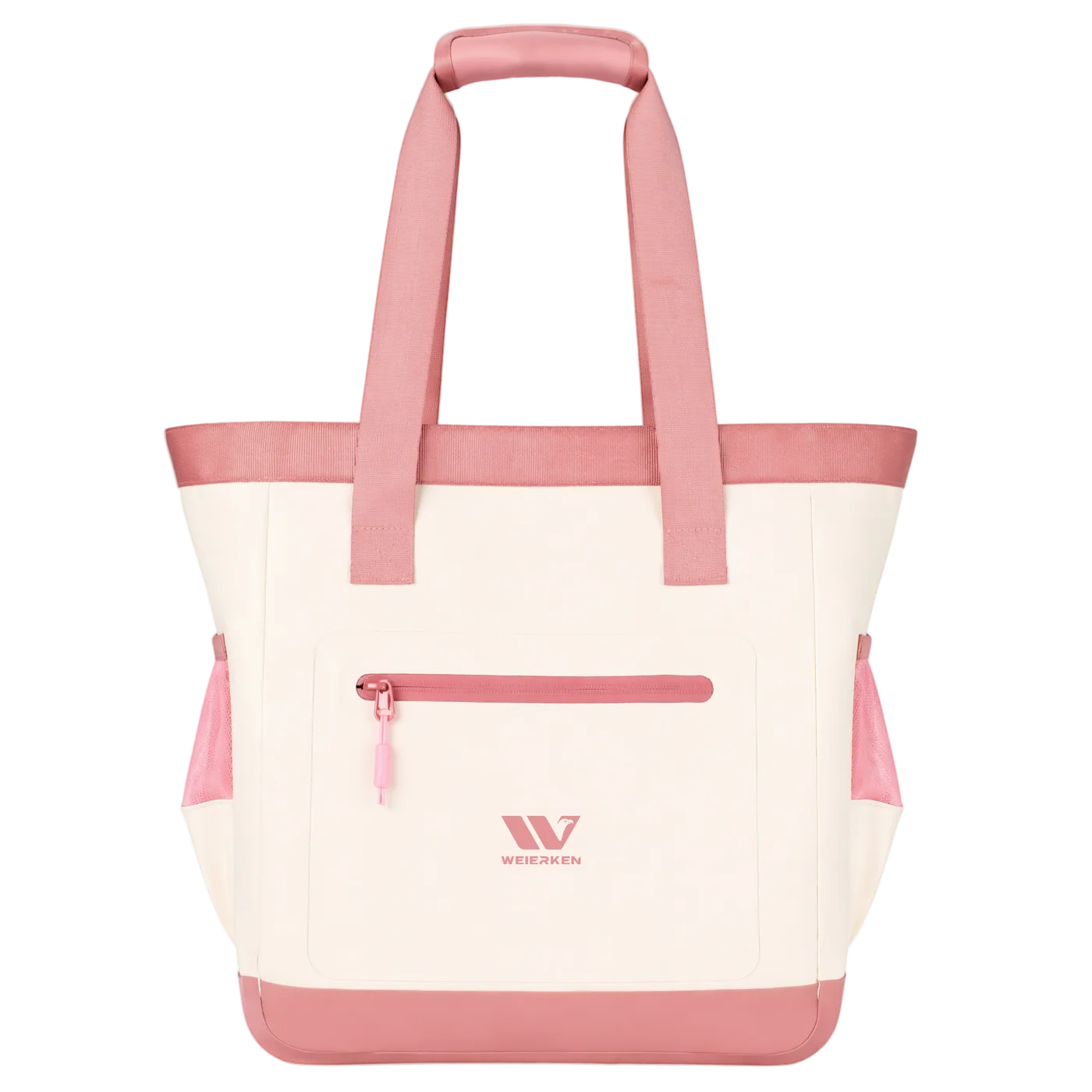
Weierken’s B01 lifestyle tote platform has an open-top layout, long handles and front and side storage. It provides a starting point for a shoulder-carry discussion. A change in body height or handle attachment can alter the usable clearance even when the webbing cut length remains unchanged.
Do not infer a complete waterproof enclosure from the model name: the listed platform is open at the top. Explain the intended exposure and contents protection separately.
Use packed width and clothing as review inputs
Pack the tote with the intended contents and observe the space between the handles and the top of the body. A broad load can push the handles outward and change how the bag sits under an arm. Soft towels and a rigid box may give different results despite a similar total volume.
Try the intended carrying action with representative clothing. If the collection is meant for use beyond summer, include the outerwear that matters to that brief. This is a practical fit review, not a claim that a single sample fits every body type.
Record whether the user can put the tote on without forcing a hand through a narrow opening, whether the top presses into the arm and whether the outer pocket remains reachable. Identify the review conditions instead of describing the result only as “comfortable.”
A handle-drop brief with concrete entries
The table below is an illustrative planning example, not an approved B01 dimension or a user-test result.
| Review item | Illustrative input | What to record |
|---|---|---|
| Measurement method | Vertical distance from marked top-edge reference to raised handle underside | Annotated sketch and agreed tolerance |
| Normal packed shape | Towel, clothing pouch and rigid lunch container | Front and side views showing the resulting body width |
| Shoulder access | Light clothing and intended seasonal outerwear | Video of putting on and removing the packed bag |
| Hand carry | The same contents, using both handles | Ground clearance and whether the base drags |
The last row matters. Increasing shoulder clearance can make a tote hang lower when carried by hand. Decide which use takes priority instead of maximizing one dimension in isolation.
Review the handle base as well as the free length
Handle attachment spacing affects how the mouth opens and how the body gathers under load. A wider attachment arrangement can change shoulder access, but it can also affect branding space and front-pocket placement. Ask the development team to explain those consequences before moving the handle bases.
Strength requirements are separate from ergonomic clearance. Specify the intended packed load and agree appropriate verification for the exact webbing, stitching or welded attachment construction. A comfortable shoulder position does not establish a safe load rating.
Our carrying systems guide covers the wider choice of handles and straps. Keep this review focused on the tote’s drop measurement and the practical trade-off between shoulder and hand carry.
Approve the visible version that customers will receive
Use the final handle material, grip detail and attachment position for the approval review. A soft temporary handle can feel different from a revised production webbing. Record any material substitution and repeat the affected checks rather than signing off on photographs from an earlier sample.
For e-commerce and catalog images, avoid artificially spreading the handles to suggest extra clearance. Show the bag with a representative load and keep the specification measurement consistent with the approved drawing.
Send Weierken your target user routine, preferred body dimensions, load list, reference measurement and branding position. These inputs allow a meaningful discussion of handle proportions; a request for “longer handles” alone does not show which problem needs to be solved.
Procurement FAQ
Is handle length the same as handle drop?
No. Handle length describes the material path or cut length, while handle drop describes a clearance measurement from defined reference points. Put the method on the drawing to avoid comparing unlike numbers.
Can one handle drop suit shoulder and hand carry equally well?
There is usually a trade-off. A longer drop can improve shoulder access but reduce ground clearance during hand carry. Review both actions with the same intended packed load.
What should be checked again after a handle change?
Review measurement, shoulder access, hand-carry clearance, attachment construction and nearby pocket or logo placement. If material or attachment details change, reassess the relevant strength requirements as well.
Discuss your project with Weierken
Send Weierken your tote measurement sketch and packed-load photos to review handle drop and carrying proportions for your brand. Send your project brief with the intended quantity, market and reference files. Pricing, sampling, MOQ and delivery commitments are confirmed for the agreed specification, not assumed from this guide.
From brief to sample
Build the right bag for your collection.
Share the intended use, product format, quantity and destination market. Weierken can review the construction and sampling requirements with your team.
Discuss your bag project Explore OEM & ODM