
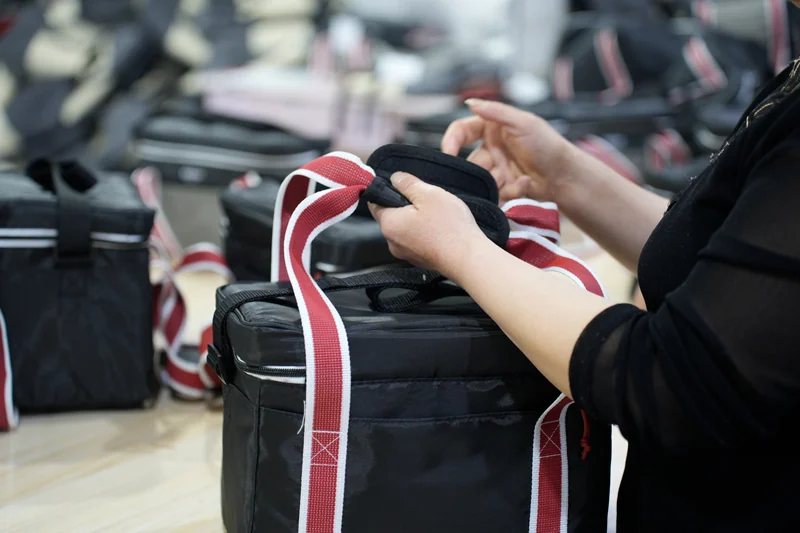
An approved bag sample is only useful later if everyone can identify which version it represents. During a reorder, a faded showroom bag, an unmarked development sample and a current production reference may look similar but answer different questions. A retention plan keeps the physical item, its specification and its custody record connected.
Define what the retained sample is allowed to prove
A reference sample helps compare appearance, layout and selected construction details. It does not replace dimensions, tolerances, a bill of materials, inspection criteria or required test reports. Write down any approved deviations rather than expecting the physical sample to explain them.
For a Weierken bag development discussion, identify whether the reference is a development sample, an approved pre-production sample or a sample retained from a particular production lot. These are different roles. A prototype that was approved for color only should not silently become the authority for every seam and fitting in a reorder.
Give every retained item an identity that survives storage
Use a sample ID, model, revision, date and approval scope on a durable tag or accompanying record. Photograph the tag alongside the bag and record where the item is stored. Avoid writing directly on a surface that needs to remain an appearance reference.
If buyer and factory hold separate reference samples, record both IDs and how their correspondence was checked. The samples need not share one physical tag, but their records must point to the same approved specification. If there is a visible difference, resolve it before the next production decision.
Do not keep an undocumented replacement when the original is damaged or borrowed. Record the reason for replacement, the authorizing person and the evidence used to confirm the replacement represents the same approved version.
A filled example of a retention register
This is a fictional record format for planning, not a claim about an actual Weierken order or customer.
| Record field | Illustrative entry | Why it matters |
|---|---|---|
| Sample identity | CB-REF-07, revision C | Separates it from earlier development versions |
| Approval scope | Layout and logo placement; color controlled by separate signed swatch | Prevents the bag being treated as the only color standard |
| Location and custodian | Sample cabinet B, assigned project coordinator | Makes retrieval possible before a reorder review |
| Associated records | Specification C, annotated photos and open-issue list | Shows which written requirements accompany the sample |
| Check before reuse | Inspect condition and confirm no later revision supersedes it | Avoids using an aged or obsolete item as the current authority |
Protect the comparison, not merely the object
Choose storage conditions and packaging appropriate to the materials, following relevant care guidance. Keep the reference away from routine use and note changes in condition. Color, coatings, foam recovery and other characteristics may change with time or exposure, so an old sample should not automatically overrule a current material standard.
Keep a controlled photo set showing the front, back, interior, labels and important interfaces. Photographs assist identification and remote discussion, but screen color and hidden construction limit what they prove. Do not discard the written specification because a photo folder exists.
If a sample is removed for a meeting, record who took it and when it is expected back. A short custody note is more useful than a complicated register that nobody maintains.
Use a reorder gate before issuing the next instruction
Before a reorder, compare the requested specification with the retained reference and check for approved changes since the previous shipment. Identify discontinued materials, changed components and revised artwork explicitly. Our reorder specification guide addresses the change review; the retention register ensures the right physical reference is present for that discussion.
If a discrepancy appears, describe it against a named requirement. “Different from the sample” is insufficient when several samples exist. Quote the reference ID, the specification field and a comparison photograph. Decide which document or approved change takes precedence before production continues.
For the next project, agree who keeps each reference, how long it should be retained and what happens at project closure. Do not assume a universal retention period or storage service. Confirm the arrangement for the particular order and record any cost or logistics implications.
Procurement FAQ
Is a golden sample enough for inspection?
No. It should be used with the approved specification, measurements, defect criteria and any required test documentation. The sample may not reveal hidden materials or an agreed tolerance.
Should the same sample be used for every reorder?
Only if it still represents the approved version and remains suitable for the comparison. Review its condition and the change history before reuse, and record any replacement or superseding sample.
What if the buyer’s sample and factory sample differ?
Pause the disputed approval, identify both sample IDs and compare them with the same specification and signed change record. Resolve which version governs each affected requirement instead of choosing whichever sample is most convenient.
Discuss your project with Weierken
Share your current sample IDs and reorder specification with Weierken to agree a practical reference and change-control arrangement. Send your project brief with the intended quantity, market and reference files. Pricing, sampling, MOQ and delivery commitments are confirmed for the agreed specification, not assumed from this guide.
From brief to sample
Build the right bag for your collection.
Share the intended use, product format, quantity and destination market. Weierken can review the construction and sampling requirements with your team.
Discuss your bag project Explore OEM & ODM