
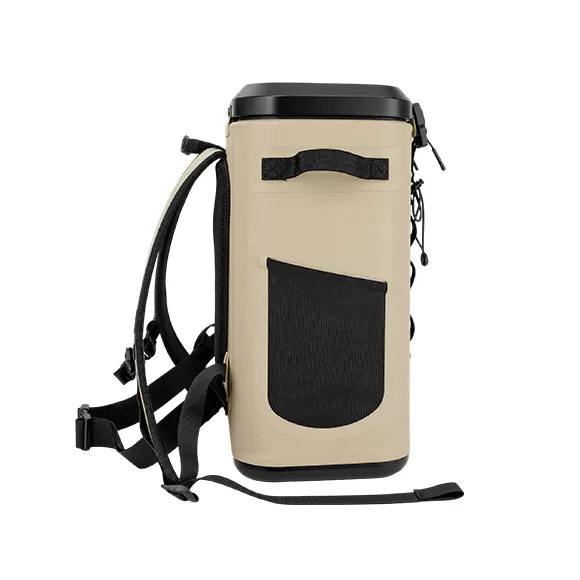
A cooler backpack’s carrying review should include picking it up, handing it over and setting it down, not only wearing it. A handle can look accessible in an empty sample while loose shoulder straps obstruct the user’s grip or trail below the bag under a real load. The solution begins with the movement sequence, not a longer list of carrying features.
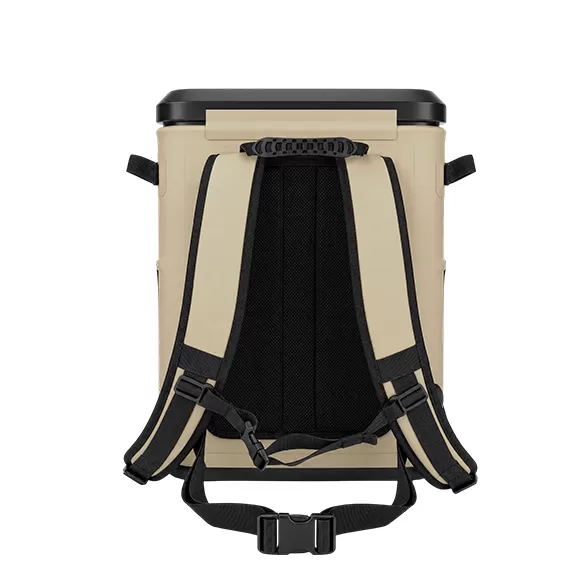
For an OEM cooler bag project, Weierken’s C04-26SS cooler backpack offers a useful format reference. The side image shows how the handle, back panel and straps occupy neighboring areas. It does not establish a tested payload, a storage system for the straps or an approved lifting procedure for another model.
1. Write down the hand-carry transition
Describe where the loaded bag starts and where it ends: on a vehicle floor, beside a picnic table or on a workbench. Identify which hand reaches the handle and whether the other hand is available to control a loose strap. This exposes problems that a static fit check may miss.
Include the return movement. When a user puts the backpack down, a dangling strap can end up under the base and obstruct the next pickup. A review should therefore follow a complete sequence: set down, reach, lift, hand off and return to backpack carry. Keep the agreed total load and strap adjustment visible in the record.
2. Review handle clearance with a realistic packed set
The worksheet below is illustrative, not a completed C04-26SS test. It shows how to describe a handling issue without inventing a carrying-capacity figure.
| Movement | What the reviewer records | Example follow-up |
|---|---|---|
| Reach the side handle | Fingers touch a loose shoulder-strap end before reaching the grip | Review the strap’s resting path and accessible grip area |
| Lift from the floor | One strap tail remains beneath the base | Compare an agreed strap-control option on the next sample |
| Pass to another user | Receiver cannot see which part is the intended handle | Clarify the grip position without treating accessory loops as handles |
| Return to backpack carry | Temporary strap control is difficult to release | Review the release sequence and remove unnecessary steps |
Use the same load arrangement for each sample. Moving heavy contents closer to the back or changing the fill level may alter how the bag hangs, so an apparent improvement might not come from the handle revision itself. Document the packed set before comparing options.
3. Compare strap management without assuming new features
Possible solutions include controlling loose tails, changing where straps rest or reviewing a dedicated temporary keeper. These are development options, not a claim that all Weierken backpacks have them. Each option should be checked for reach, release, bulk against the back and interference with the main opening.
Do not shorten an adjustable strap simply to make the photograph tidier. Its usable range may be important for the intended users. Review the shoulder-strap adjustment range separately, then evaluate the spare webbing at the agreed short and long settings. A sample can satisfy one setting and fail another.
4. Check the load path and the parts used as handles
Mark which grips are intended for carrying and how each attaches to the body. Review reinforcement, surrounding seams and the intended direction of pull with the factory. Decorative webbing loops, zipper pulls and pocket edges must not be silently treated as alternative lifting points.
If the buyer needs a payload or durability claim, define the relevant finished-product assessment and supporting evidence. A casual handoff with one prototype is an ergonomic observation, not a load rating. Keep those two conclusions separate in the sample sign-off. The carrying-systems guide explains the broader choices; this review focuses on the handoff transition.
5. Record the final movement, not just the final drawing
Save a short sequence of the agreed pickup and handoff using the approved sample. Add the load list, strap settings, handle dimensions and revision reference. If a handle is moved, check that it does not restrict a pocket opening or place the user’s fingers against a closure component.
Connect the handling observation to the cooler sample approval record. Before a reorder, check whether changes to insulation, body depth or back-panel padding alter the same clearances. A handle drawing can remain unchanged while the surrounding space becomes tighter.
Frequently asked questions
Can a side accessory loop replace the main carry handle?
Do not assume so. Identify the intended carrying grips and review their construction and agreed load requirements. A loop’s convenient location does not establish that it is suitable for lifting the bag.
Should the shoulder straps be shortened to stop them trailing?
Not without checking the required adjustment range. Compare strap-management options at the approved settings rather than removing fit capability for part of the user group.
What is the most useful sample video for this issue?
Show the loaded bag being set down, picked up by the intended grip, passed to another user and returned to backpack carry. Include the strap settings and packed load so the review can be repeated.
Send a focused project brief
Send your intended carrying sequence, packed contents and user-fit requirements. An annotated side view is especially useful when reviewing handle clearance. Request a Weierken manufacturing review with your company, product format, quantity, destination market and drawings. MOQ, sampling arrangements, pricing and delivery timing must be confirmed for the actual specification.
From brief to sample
Build the right bag for your collection.
Share the intended use, product format, quantity and destination market. Weierken can review the construction and sampling requirements with your team.
Discuss your bag project Explore OEM & ODM