
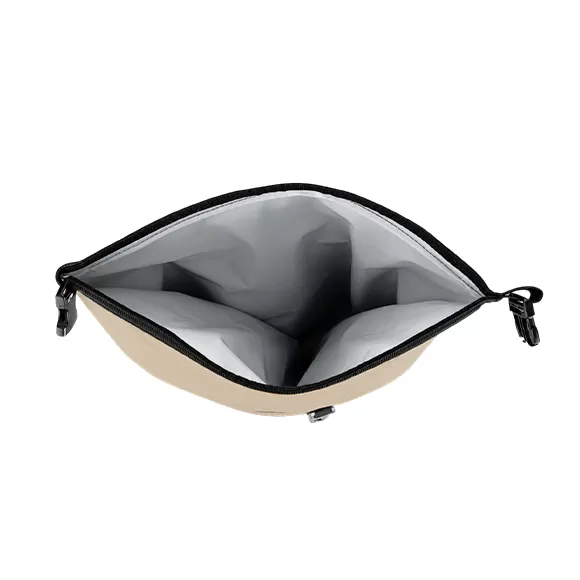
A damp cooler bag should not be diagnosed from one photograph. Moisture can come from wet contents, a cooling pack, a spill, a seam or condensation on a cold surface. A useful purchasing review records where the water first appears and under what conditions. This helps Weierken discuss the construction instead of guessing that every damp patch means the same defect.
Identify the water source before changing the bag
Check whether the contents and cooling packs were dry on the outside before loading. Photograph the empty, dry bag and note existing stains or moisture. If a container or pack is leaking, changing the bag liner may not address the source.
Record whether moisture is on the outside shell, inside liner, beneath the bag or around a specific seam. Condensation can occur when a surface is below the surrounding air’s dew point, but a photo alone does not establish that this was the cause in a particular bag.
Write a repeatable observation sequence
Use the intended containers and cooling arrangement. Record room temperature, humidity if available, starting conditions, elapsed time and opening frequency. Put the bag on a clean, dry observation surface. Check and photograph defined locations at agreed intervals instead of wiping the evidence away between checks.
Repeat the observation on another sample if a result is unclear. Do not combine water added intentionally inside the liner with an external condensation review and then call all visible moisture a leak.
Keep performance claims separate
A liner leak check and an insulation test answer different questions. A bag may keep its contents cool while allowing liquid through an unsealed opening; another bag may contain a spill without meeting a requested temperature profile. Neither result establishes an unspecified waterproof rating.
For a purchasing decision, agree the acceptable result for the actual use. A consumer lunch bag, a fishing cooler and a delivery program may have different handling and cleaning routines. Any temperature or liquid-retention claim needs a matching method and sample scope.
Turn the findings into a specific factory question
An effective report says, for example, that moisture first appeared beneath the left rear corner after a recorded loading period, while the cooling packs remained intact. It includes the sample version and dry baseline photos. It does not simply say the whole bag failed.
Weierken can use that location-based record to review liner shape, joints, closure use and the proposed test sequence. Any construction revision should be checked again under comparable conditions, rather than accepted because the next photo looks dry.
Purchasing worksheet
Use this as a project worksheet, not a completed test report. Swipe the table on a small screen.
| Observation | Record | Do not assume |
|---|---|---|
| Exterior moisture | Location, time and surrounding conditions | That the liner necessarily leaked |
| Interior liquid | Container and pack condition | That all liquid came from condensation |
| Seam concern | Dry baseline and first wet point | A waterproof rating from one observation |
Buyer FAQs
Does condensation automatically mean a defective cooler bag?
No. Identify the moisture source and operating conditions before deciding whether a construction defect is present.
Can a leak review prove a cooling duration?
No. A temperature-performance review needs its own loading, environmental and measurement conditions.
Explore our cooler bag collection alongside the project worksheet below.
Prepare your Weierken project brief
Include dry and wet photos, the sample identifier, the load, cooling-pack condition and an observation timeline. Do not send customer-sensitive information that is unnecessary for the technical review.
Related guidance: insulation test planning, quality-issue photos. Send your project details to Weierken.
From brief to sample
Build the right bag for your collection.
Share the intended use, product format, quantity and destination market. Weierken can review the construction and sampling requirements with your team.
Discuss your bag project Explore OEM & ODM