
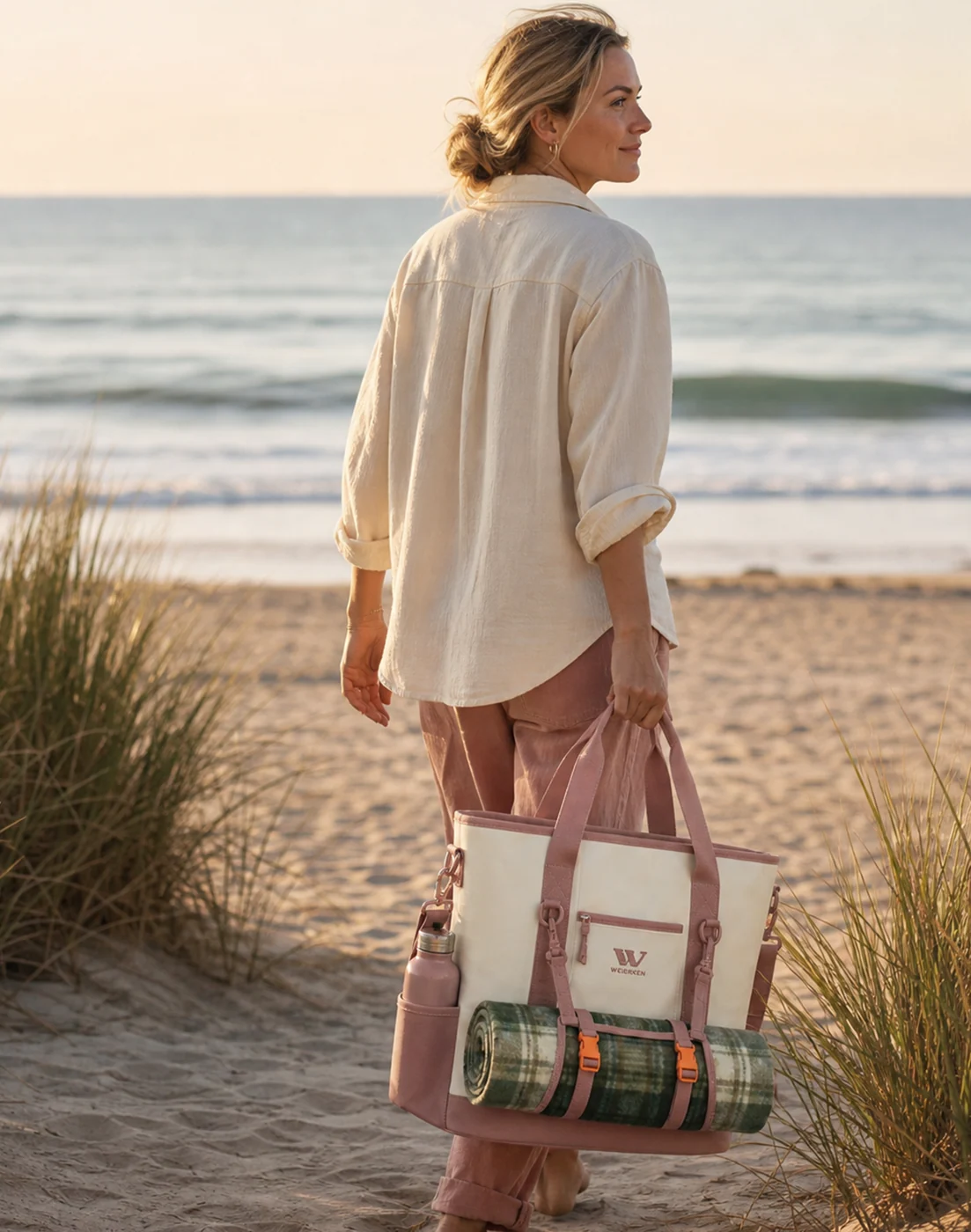
A bag used after water sports or at a beach may carry damp equipment alongside items the user wants to keep dry. Start by defining that separation problem. For a Weierken waterproof-bag project, show the load and access sequence rather than assuming any added pocket solves it.
Distinguish a storage pocket from a protective barrier
Record which items are damp, their size and how they will be packed. A mesh organizer may keep items easy to find while offering no barrier to moisture. A separate pouch presents another design question: how it closes, where it sits and whether it can be removed for care.
Look at the moments when the main opening is exposed. An item may be protected while the bag is closed but become wet during loading or removal. Define the expected use conditions and seek evidence for any waterproof claim instead of extrapolating from one component.
A worked brief you can adapt
| Decision | Example brief | Evidence to request |
|---|---|---|
| Damp equipment | Folded towel in an illustrative load | Size and placement reference |
| Dry belongings | Small pouch kept separately | Defined closure and access requirement |
| Access | Retrieve pouch before unloading gear | Demonstrated removal sequence |
| After use | Remove damp items and dry the bag | Care guidance for chosen construction |
Turn the review into an actionable request
For the example load, placing a dry-item pouch below the damp towel makes access awkward and may expose it during removal. Review whether the location or sequence should change. A larger bag is not the only possible response; the access arrangement may be the real issue.
Ask Weierken to discuss the body construction, pockets and carrying arrangement together. Keep each claim specific: an organizer, a splash-resistant compartment and a tested waterproof enclosure are not interchangeable descriptions. Only publish the level supported by the final configuration and evidence.
For the connected specification, use our waterproof bag pocket layout. Send the completed brief through the Weierken project inquiry form, including your company, work email, phone, product and quantity. Ask for any unresolved item to be listed separately in the reply; a proposal is not an approved production instruction.
Frequently Asked Questions
Can a mesh pocket be described as a dry compartment?
No, not simply because it separates items. Describe its actual storage function and do not imply moisture protection that has not been demonstrated.
Should phones or other valuables be used in a prototype test?
Use appropriate non-valuable substitutes when checking fit and access. Agree any exposure evaluation separately rather than risking valuable items to demonstrate an unverified claim.
From brief to sample
Build the right bag for your collection.
Share the intended use, product format, quantity and destination market. Weierken can review the construction and sampling requirements with your team.
Discuss your bag project Explore OEM & ODM