
A small top hatch can make a soft cooler easier to use, but only if the intended item can be removed through it. The question is more specific than whether a lunch box fits inside the bag. Review the item, the user’s grip and the route through the secondary opening without treating the whole cooler volume as available hatch clearance.
Choose the quick-access item first
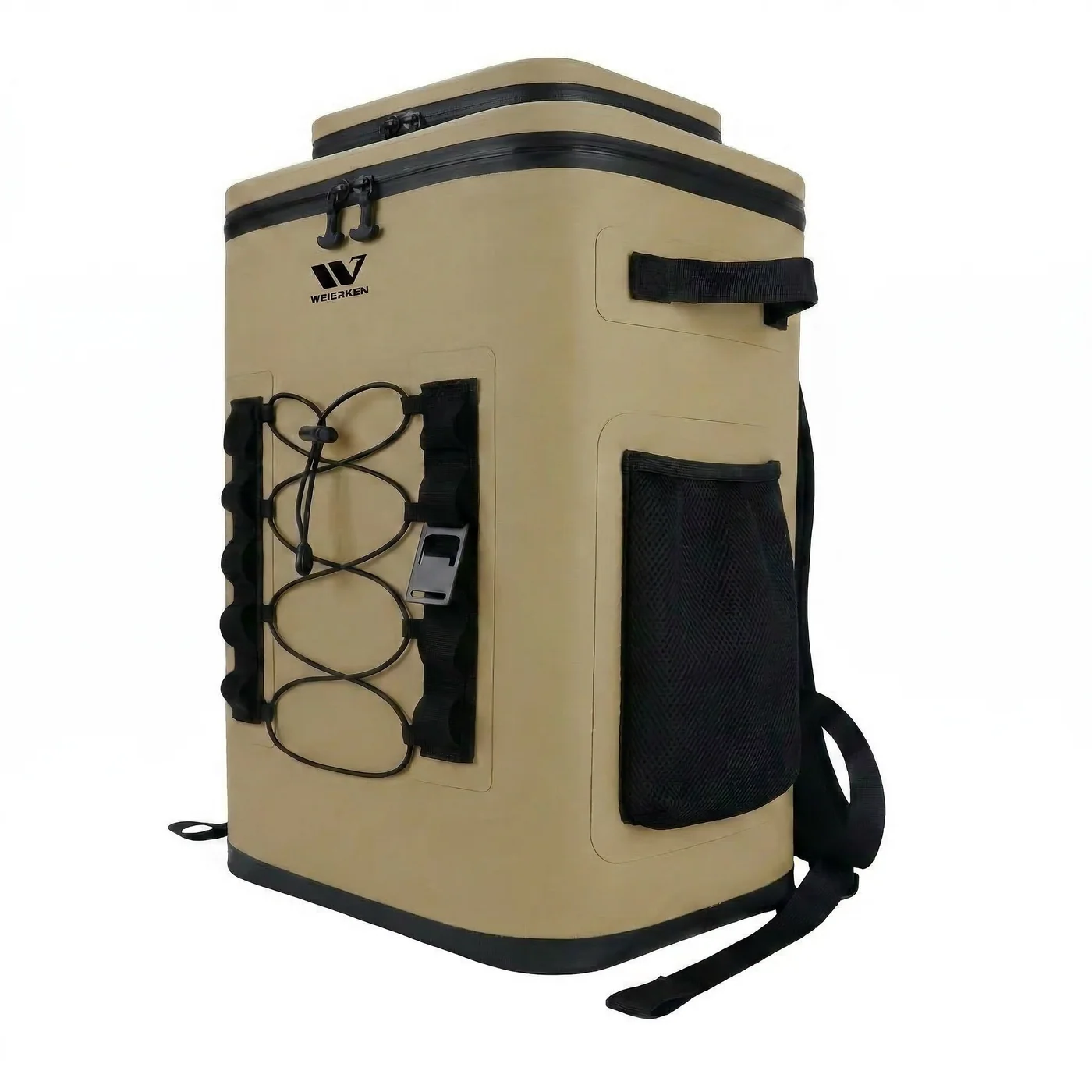
Weierken’s C02 quick-access soft cooler has a top access port and a full main opening. The full opening remains available for larger loading and unloading tasks. A custom project should name which items are intended to pass through the smaller opening and which are deliberately handled through the main lid.
Send actual container samples or dimensioned references, including lids, projecting handles and carrying sleeves. A can, a narrow bottle and a rectangular food container require different retrieval movements. Do not choose the opening dimensions from a single front-view product photograph.
Allow for a hand, not only the object
An object may pass through an opening by itself but be awkward to retrieve once someone has to grip it. On the sample, place the nominated item in its intended location and remove it using the normal hand position. Record whether the user must tip it sharply, lift another object or squeeze the surrounding soft panel.
Include any relevant glove or grip requirement in the brief. If that is important, test the proposed action under those defined conditions. Do not claim universal one-handed or glove-friendly access from an empty-bag demonstration.
Watch the hatch lid too. It should not be pushed into the retrieval route simply to create a larger-looking opening. Photograph the position it naturally takes during the intended operation.
A retrieval matrix for the sample review
This is an illustrative buyer worksheet. It does not state the verified fit or capacity of a particular C02 sample.
| Object or task | Planned route | Review question |
|---|---|---|
| Frequently used drink container | Small access port | Can the user grip and remove it without disturbing other contents? |
| Wide food container | Full main opening unless separately verified | Is the main opening convenient for initial loading and final unloading? |
| Flat cooling pack | Agreed position in the packed layout | Does it block the item selected for quick retrieval? |
| Used contents after the outing | Full opening | Can the interior be reached for the specified cleaning and drying method? |
Keep the packed-layout photo with the matrix. If the drink is moved beside the hatch for the demonstration but normally sits at the other end, the apparent convenience may not reflect real use.
Do not turn an access feature into an untested thermal promise
A smaller opening changes how the user accesses contents, but it does not alone establish a particular cooling duration or temperature benefit. Claims depend on the complete construction, contents and operating conditions. Use a suitable insulation test brief for performance questions rather than quoting an assumed benefit from hatch size.
The secondary closure also needs its own operation review. Show its fully closed position and check for interference from external straps or loaded pockets. If the custom project changes the hatch shape or opening reinforcement, assess the effect on the lid assembly before approving the new appearance.
Make the customer instructions match the approved layout
Explain which opening to use for each task. A buyer may prefer a compact hatch for drinks and a large lid for meals; that is a clearer design proposition than implying everything can be accessed through the smaller port.
Use product photographs that show the actual access feature and representative items. Do not substitute a very small bottle merely to make the opening look generous. Keep any demonstration tied to the approved sample and distinguish an illustrative arrangement from a tested performance claim.
For a Weierken quotation, provide the quick-access item, the full contents list, expected loading order, intended market and any required operating conditions. We can then discuss the platform and sample-review questions without guessing what “easy access” means for your customers.
Procurement FAQ
Should every container fit through the small hatch?
Not necessarily. The small opening can be dedicated to frequently removed items while the full lid handles larger containers. Define the intended division of tasks before changing the construction.
Does a smaller opening guarantee longer cooling time?
No. That would require appropriate evidence under stated conditions. The access feature alone does not establish a thermal result for the finished cooler.
What should be photographed during approval?
Show the nominated item inside the normal packed arrangement, the user’s grip during retrieval, the hatch in its natural open position and both closures fully closed. Include the sample revision and the item dimensions.
Discuss your project with Weierken
Send Weierken the item you want users to retrieve most often, together with the full cooler load, to review a practical quick-access lid. Send your project brief with the intended quantity, market and reference files. Pricing, sampling, MOQ and delivery commitments are confirmed for the agreed specification, not assumed from this guide.
From brief to sample
Build the right bag for your collection.
Share the intended use, product format, quantity and destination market. Weierken can review the construction and sampling requirements with your team.
Discuss your bag project Explore OEM & ODM