
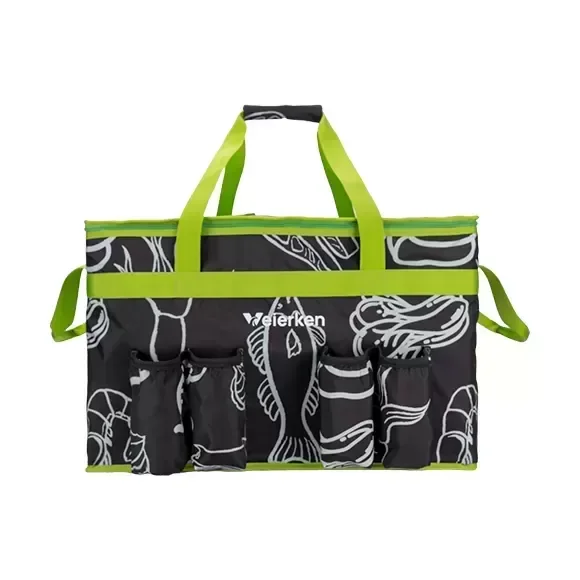
A cup insert can locate drinks without containing a spill, and a sealed-looking compartment can still be awkward to load. For a delivery fleet, specify the actual cup family, lids and handover routine before choosing a generic four-cup layout. Weierken needs those inputs to review cup support, usable space and cleaning as one system.
Measure the cup family, not only its capacity
Provide top and base diameters, height and the range of approved lids. Include sleeves, carrier trays and any outer paper bag used by the restaurant. Two cups with the same stated volume may need different support positions or opening clearance.
Identify which combinations are common and which are exceptional. A bag intended for mixed hot and cold drinks should be assessed with those specific containers; do not infer food-safety or temperature-separation performance from the number of compartments.
Distinguish restraint from liquid management
Review where the insert contacts the cup and whether it loads the lid or squeezes a flexible wall. Check insertion and removal with the intended gloves and bag position. A tight fit is not automatically a better fit if it makes the cup difficult to remove without disturbing its lid.
Decide separately what should happen if a drink leaks. Does liquid remain within a removable tray, reach the liner or enter another order space? A cup holder should not be described as spillproof without a defined containment requirement and appropriate verification.
Review a realistic loading sequence
Use filled, closed containers appropriate to the agreed trial. Place and remove the order in the sequence a rider will follow. Record tipping, restricted access and movement during the planned handling review. Avoid inventing a universal tilt angle or drop height that has not been agreed for the project.
Include a partial load. A full set of cups may support itself differently from one cup in a larger insert. If the fleet permits several configurations, photograph each approved arrangement.
Make replacement and cleaning practical
Check how the insert is removed, cleaned, dried and put back. Label its orientation if needed. Record whether replacement inserts are available and how the buyer identifies the correct version; availability should be confirmed commercially rather than assumed from the drawing.
If the restaurant changes cup suppliers, compare the new dimensions before reordering bags or inserts. Keep the approved cup list with the product file so a later fit complaint can be traced to the correct combination.
Purchasing worksheet
Use this as a project worksheet, not a completed test report. Swipe the table on a small screen.
| Review area | Input | Acceptance record |
|---|---|---|
| Fit | Cup and lid dimensions | Loaded insert photos |
| Handling | Partial and complete orders | Insertion and removal observations |
| Spill response | Required containment and cleaning | Defined review and instructions |
Buyer FAQs
Does a cup holder make a delivery bag spillproof?
No. Cup restraint and spill containment are separate functions.
Can the same insert fit every cup with the same ounce size?
Do not assume so. Compare the actual cup profile, lid and sleeve dimensions.
Explore our delivery bag manufacturing alongside the project worksheet below.
Prepare your Weierken project brief
Send cup drawings or measured samples, the common order combinations, quantity and cleaning routine. Weierken can review the insert around your actual packaging rather than a nominal cup count.
Related guidance: delivery compartments, carrier and bag fit. Send your project details to Weierken.
From brief to sample
Build the right bag for your collection.
Share the intended use, product format, quantity and destination market. Weierken can review the construction and sampling requirements with your team.
Discuss your bag project Explore OEM & ODM