
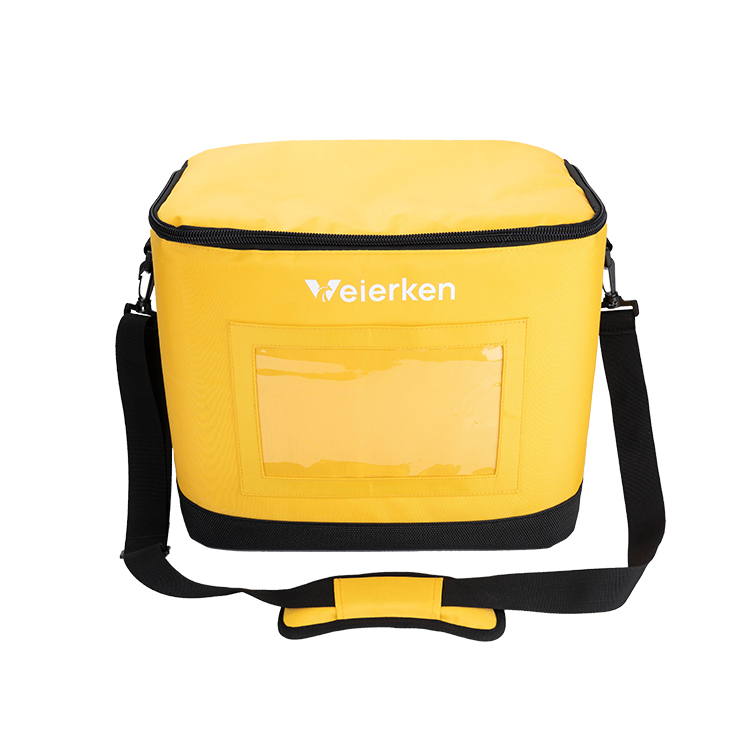
A clear pocket on an insulated delivery bag can look adequate in a product photograph yet fail at pickup: the order number sits behind a seam, a narrow opening folds the receipt, or the shoulder strap covers the label. For a custom delivery bag, the useful specification is not simply “add a transparent pocket.” It is an agreed combination of insert size, visible area, access direction and handling checks.
This guide uses the Weierken DBS036 insulated shoulder delivery bag as a physical reference. Its supplied photographs show a clear front document pocket, a zip-around lid and a detachable shoulder strap. They do not establish pocket dimensions, film composition, water resistance or barcode performance. Use the review below to turn that reference into a sample brief rather than treating the photograph as an approved specification.

Start with the information staff must see
Ask the dispatch team for an anonymized receipt or order card from its actual printer. Mark the order ID, bag sequence and any essential handling symbol. A long receipt containing payment details is a different insert from a short reusable route card; the pocket should not expose information that the handover team does not need.
For multi-bag orders, write the bag sequence separately from the reusable bag’s permanent identity. “Order EX-104, bag 1 of 2” identifies a particular handover; a sewn asset label identifies the carrier itself. Mixing these roles can leave an old order number on a bag after its contents have changed. Our custom bag barcode and label placement guide separates order, product and packaging labels.
Clear order identification also has an operational basis: Uber Direct’s merchant guidance recommends matching order IDs at pickup and identifying every part of a multi-bag order. That guidance explains the handover need; it does not certify a particular Weierken bag or pocket design.
Specify the insert, opening and visible window separately
Three measurements belong on the drawing. The insert envelope is the outside size of the paper or card, including any sleeve. The clear visible window is the area left after seams, edging and reinforcement. The opening is the usable entry through which staff must slide the insert. A nominal outside pocket size cannot substitute for any of these.
Place the critical order-number block inside the visible window, with room for the card to move during handling. If the receipt must be folded, mark the fold and show which information remains visible. Do not select a stock paper size first and assume the existing DBS036 pocket fits it: no approved pocket measurements are stated here.
Choose the opening direction by demonstrating the loading action. A top-entry pocket and a side-entry pocket can behave differently when the loaded bag is lifted or set down. The sample review should reveal whether the card slips, catches on an edge or needs two hands to change. Any retaining flap or closure must be reviewed as a proposed construction, not assumed from the photograph.
A completed review sheet is more useful than “make it readable”
Illustrative example only: the following is a fictional review brief, not a customer project, measured DBS036 specification or completed factory test. Replace the example document with your own anonymized printout and record measured results on the sample.
| Review item | Example brief entry | Evidence required before approval |
|---|---|---|
| Insert reference | EX-104 order card, version A; order ID and “1 of 2” on the upper line | Attach the actual-size print file and a photograph of the physical insert |
| Window layout | Keep the upper identification line outside the seam and edging zones | Dimensioned pocket drawing plus a straight-on photograph with the card inserted |
| Access action | Dispatcher replaces the previous card without opening the main compartment | Short demonstration using the proposed opening and the actual insert |
| Loaded handling | Order line remains unobstructed with the strap attached and the lid closed | Front and oblique views of the sample in its agreed loaded configuration |
| Release decision | Hold approval if edging hides the bag sequence or the card slips out during the agreed handling check | Recorded observation, proposed correction and the revised sample reference |
This sheet gives purchasing and sample development the same decision points. A failure should produce a specific correction—move the window, revise the insert layout or change the opening—not an instruction to “improve the pocket” without a drawing revision.
Review the pocket on a loaded bag, not an isolated fabric panel
Use the agreed representative load and attach the carrying system. Check the front view with the lid shut, then check the normal pickup angle. Look for a strap, folded sidewall or bulging contents that covers or distorts the window. Record which load arrangement was used; a favorable result with an empty bag does not establish readability when loaded.
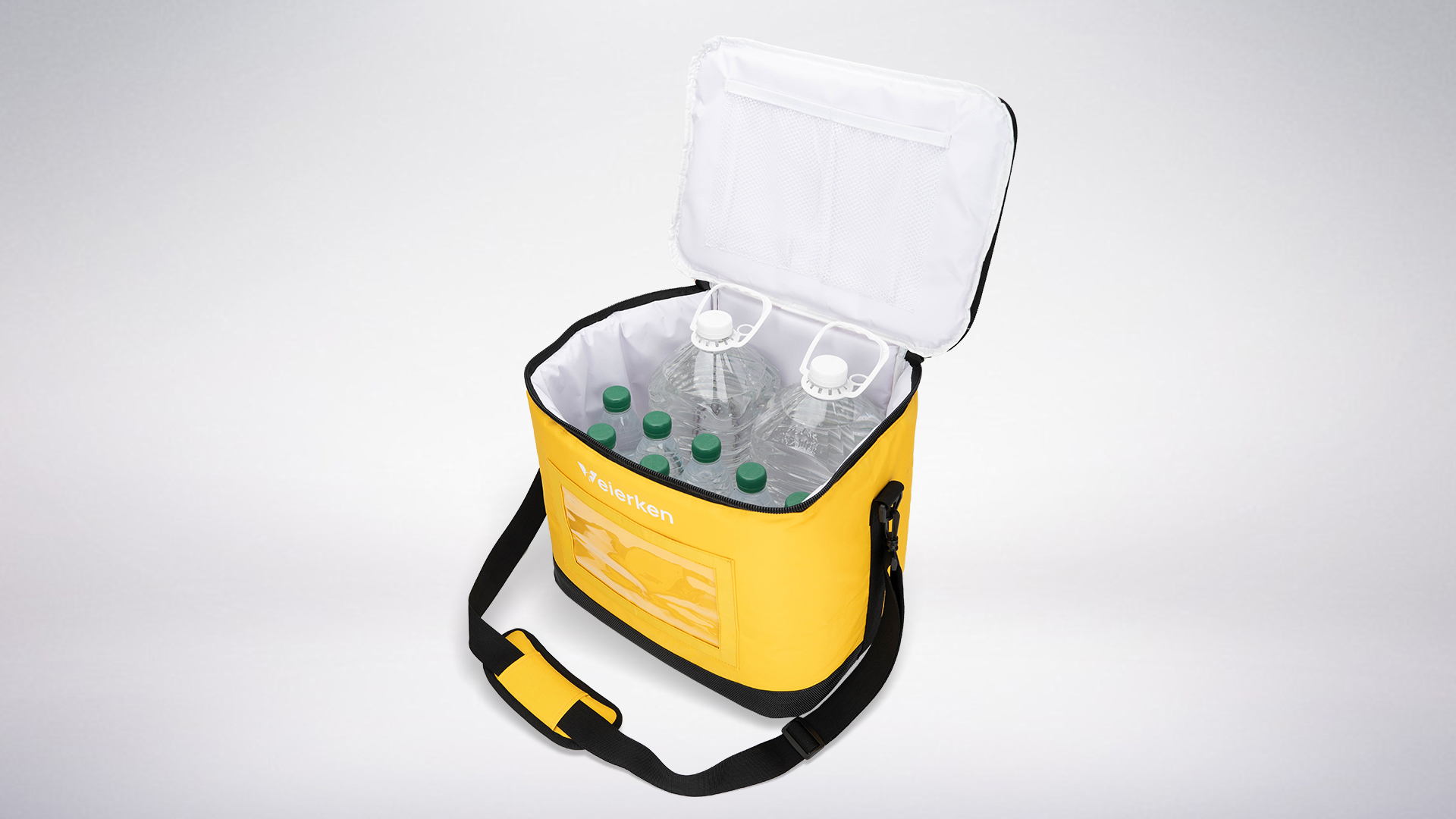
Check card replacement before and after lifting the sample. If staff must move the shoulder strap away each time, that extra action belongs in the review record. Check that opening the document pocket does not require opening the insulated compartment. For broader pickup and handover planning, use the grocery delivery bag handover brief; keep this pocket review focused on the information interface.
Separate visual readability, scan checks and material claims
Review the order line under the intended indoor pickup lighting and outdoor handover conditions. Change the viewing angle to identify glare or wrinkling. Record the lighting, card and sample used instead of declaring the film “anti-glare” from one photograph. Confirm the proposed film and cleaning method separately; a clear window is not automatically waterproof, abrasion-resistant or compatible with every cleaner.
If the operation scans a barcode through the window, test the actual printed label, scanner and pocket together. A successful phone scan is only a functional observation for that setup. GS1 New Zealand explains that a readable barcode can still have data or technical faults. Formal barcode verification and a practical through-pocket scan check answer different questions; neither result should be invented for a sample that has not been tested.
Send Weierken one traceable sample brief
For a custom delivery bag enquiry, identify DBS036 as the starting reference, attach the anonymized insert and mark its critical reading area. Include the carrying arrangement, proposed opening direction and the observations that will decide approval. Ask for the resulting pocket drawing and sample revision to carry the same reference as the insert file.
Keep the order-ID pocket specification separate from insulation, food-contact, cleaning and commercial requirements. Those need their own evidence and quotation scope. This prevents a small label-access change from being mistaken for approval of the whole bag.
Frequently asked procurement questions
Can an existing clear pocket fit our printed receipt?
Only a measured drawing or sample can answer that. Supply the actual receipt, including any fold or sleeve, and compare its envelope with the usable opening and clear window. The order line must remain visible after insertion and loaded handling; outside pocket dimensions alone are insufficient.
Should we put the order number on the permanent bag label?
Keep a reusable bag’s asset or product identity separate from the changing order identity. Use a replaceable card or another agreed temporary identifier for each handover. For multi-bag orders, include the bag sequence so that staff can distinguish a complete order from one of its parts.
Does a clear order pocket protect the receipt from rain?
Transparency does not establish water protection. Opening direction, edge construction and any closure matter. Define the intended exposure and acceptance check with the sample team; do not infer a waterproof claim from the DBS036 reference images.
What should we do if the barcode scans only at certain angles?
Record the scanner, label print and pocket condition, then compare the same label outside the pocket. This helps separate film glare or distortion from printing and data issues. Correct the identified cause and repeat the agreed check; use formal verification where the buyer’s barcode requirements call for it.
From brief to sample
Build the right bag for your collection.
Share the intended use, product format, quantity and destination market. Weierken can review the construction and sampling requirements with your team.
Discuss your bag project Explore OEM & ODM