
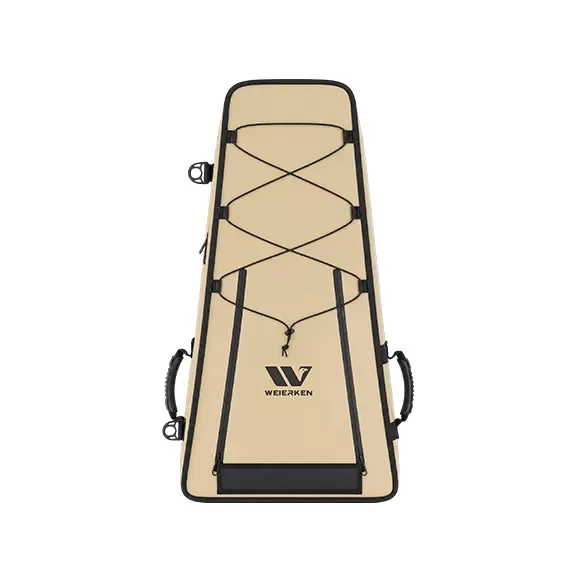
Planning custom kayak fishing bag equipment access begins with an equipment list and a clear orientation drawing, not a count of pockets. Identify the items that require frequent access and the space around each proposed opening. Use that information in an on-shore sample review, with installation and protection requirements assessed separately by the responsible team. Ask Weierken to review the proposed bag layout against the brief rather than treating a product photograph as proof of platform compatibility. Retain the agreed map with the sample revision so that later design changes can be compared with the same intended arrangement.
A long kayak fishing bag needs more than a list of rod and tackle compartments. The buyer must define which end faces the user, which items need frequent access and what surrounds the opening. A layout that looks organized on a showroom table can become inconvenient when the bag is positioned in its intended installation.
For a Weierken fishing-bag brief, draw an access map before selecting pocket details. Keep this procurement and sample review on shore in an appropriate controlled setup. It is not advice for modifying a vessel, a safety approval or an instruction to reach for equipment while paddling.
Give every drawing a consistent orientation
Mark the user-facing end, the opening direction and the reference surface. Include adjacent structures and equipment that can obstruct access. If the bag will be installed on a customer’s existing platform, obtain its dimensions and permitted attachment information rather than designing around an assumed universal layout.
Use photographs with the proposed position marked, plus a simple top and side view. Distinguish dimensions that cannot change from preferred dimensions. This lets Weierken discuss whether the reference format is suitable or a different shape would be a better starting point in the product range.
Separate frequent access from reserve storage
List what goes inside and how often it is needed. Small tackle boxes, tools and reserve supplies may have different access priorities. Describe the packed object, its orientation and the space needed to grasp it. Avoid a generic instruction such as “add more pockets” when the actual issue is that one frequently used item is underneath another.
NRS’s mesh deck bag information describes the access arrangement and attachment features of its own product. It is useful as an example of documenting those as separate features, not as evidence that another bag shares its construction, compatibility or instructions.

Review an on-shore mock-up with actual equipment
Place the development sample in the proposed position without making unapproved vessel modifications. Load the reference equipment and review the opening path. Photograph where a lid, zipper pull, elastic cord or loose strap enters another component’s space. Refer any vessel-specific, entanglement, emergency-access or installation-safety question to the responsible qualified party.
For the bag design itself, identify whether changing a pocket location or opening direction would address the problem. Review the packed shape, not only an empty flat outline. A stiff item can change the envelope and make a previously accessible compartment awkward to open.
An example equipment access map
This fictional sheet demonstrates how to brief a development review. It is not a mounting plan, a completed trial or a declaration that C24 accommodates the listed equipment.
| Equipment group | Illustrative design question | Record to approve |
|---|---|---|
| Frequently used small box | Can it be removed without unpacking reserve items? | Actual box dimensions and compartment opening photo |
| Long reference item | Is its insertion direction clear in the proposed position? | Item outline and packed side view |
| External accessory | Does its location obstruct a closure or another necessary component? | Marked interference photo and revised layout |
| Reserve contents | Can storage remain organized without adding unnecessary openings? | Contents list and approved internal arrangement |
Keep attachment, access and protection requirements separate
An accessible pocket does not prove secure mounting; a closed bag does not prove water protection. Write the relevant acceptance requirements separately. If a buyer needs verified protection against a stated exposure, specify the complete construction and appropriate evaluation instead of inferring a rating from coated fabric or a catalog title.
The waterproof construction guide explains the need to consider more than a fabric name. Review any proposed attachment interface with the responsible product and platform teams. Do not describe a bag as universally compatible or advertise an unverified load-bearing function.
Retain the map for repeat orders
Keep the equipment list, orientation drawing, opening sequence and approved revision together. A reorder that changes a compartment width or fastening component may require the relevant access review again. Add marked photos to the sample revision record so the reason for each change is visible to both buyer and factory.

Who this development brief is for
Best for: brand sourcing teams, distributors and product developers preparing an OEM sample review. Suitable for: a defined industrial or commercial bag project with an identified approval owner. Not suitable for: inferring a load rating, protection claim or universal compatibility from a reference photograph alone. Record the required order quantity, destination, packaging and delivery objective in the RFQ.
Procurement FAQ
Does a kayak bag need a unique design for every platform?
Not necessarily, but compatibility must be assessed against the actual installation and permitted interface. A shared reference format is not proof of universal compatibility. Provide the available platform information, intended position and the limits relevant to the development brief. Ask which details still require review by the responsible installation team. Keep an acceptance for one arrangement distinct from a claim about other equipment or platforms.
Should external bungee cords be part of the access review?
Yes. Their proposed contents and position can affect openings and nearby equipment. Keep bag-layout observations separate from any required installation-safety assessment. Place the intended equipment in the development sample and observe whether the proposed retention arrangement obstructs a closure or changes the planned opening sequence. Document the arrangement and any unresolved question. Approval of access should not be reported as proof of attachment strength or platform safety.
Can a photograph establish waterproof performance?
No. A product image describes appearance, not an independently verified protection rating. Specify the needed exposure conditions and suitable construction-level evidence. Ask the supplier to identify the relevant material, seam and closure information for the proposed design. Agree what evaluation is required for the buyer’s use and who will accept that evidence. Keep an appearance reference separate from any claimed or tested protection performance.
What is the most useful first document for Weierken?
An annotated position drawing with the equipment list, critical dimensions, access priorities and intended order quantity. Include existing platform information and identify questions requiring qualified platform review. Distinguish fixed requirements from tentative layout ideas and assign a revision to the development drawing. Add the expected order quantity and destination market as commercial inputs. Ask the supplier to list assumptions in the proposal so that a convenient reference layout does not become an unreviewed production requirement.
How should access changes be recorded after the first sample?
Mark the changed opening, pocket or attachment location on the controlled layout and identify the equipment affected by the change. Repeat the relevant on-shore access review under the agreed conditions. Keep installation questions with the responsible team and retain the sample photographs with their revision. A successful review of one opening does not automatically approve every other compartment or use arrangement.
Turn the equipment list into a clear bag brief
Send Weierken your fishing-bag project brief with the orientation map and reference photographs. Sample scope, verification requirements and commercial terms are agreed for the specific project.
From brief to sample
Build the right bag for your collection.
Share the intended use, product format, quantity and destination market. Weierken can review the construction and sampling requirements with your team.
Discuss your bag project Explore OEM & ODM