
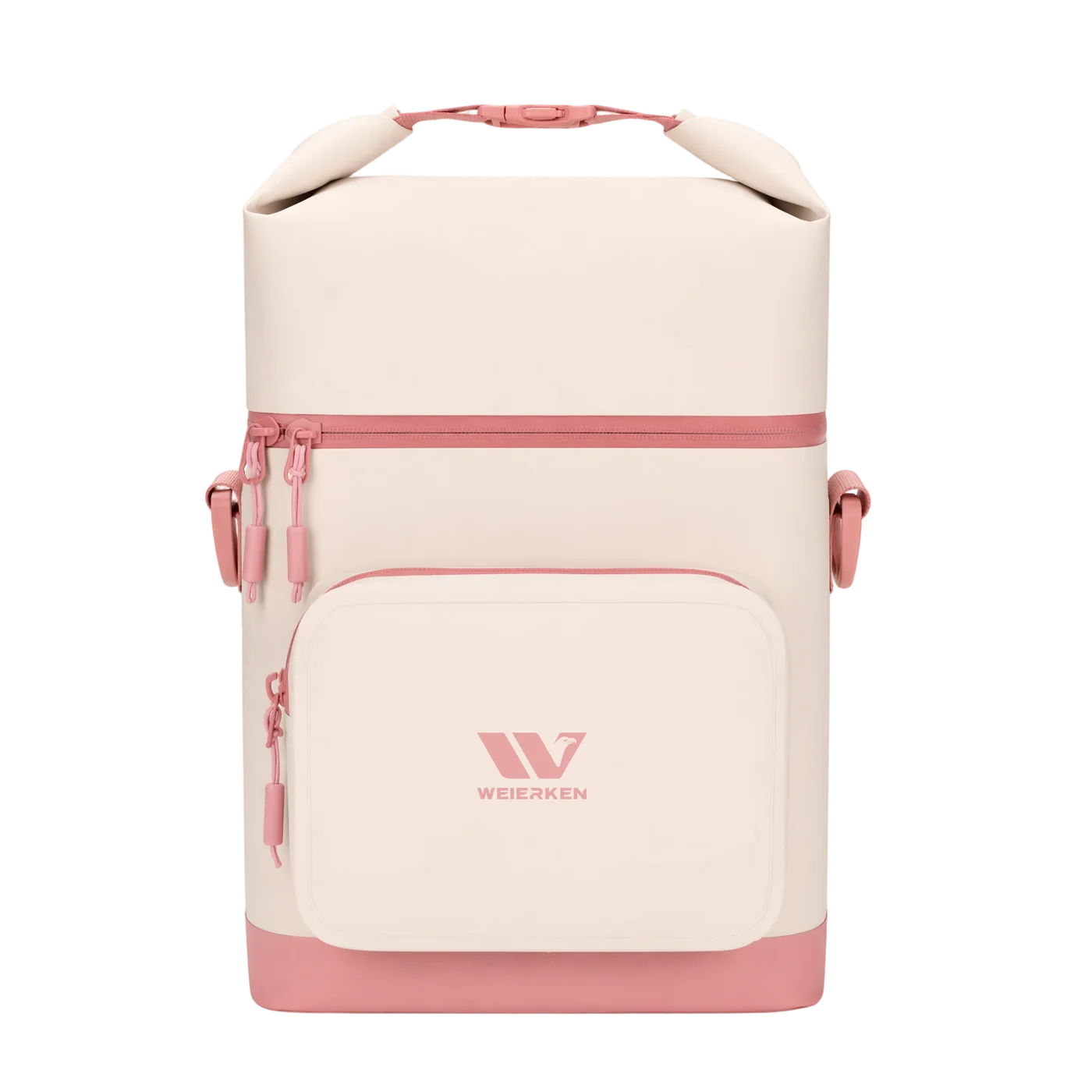
For custom cooler bag replacement divider specification, start with the physical interfaces in the development brief. A replacement cooler-bag divider should be specified as an identified mating component, not simply as a panel with approximately the same outline. Before approving a spare-part order, connect the divider revision with the bag revision, attachment arrangement and intended contents. Review the actual pair in the agreed development sample. A divider that can be placed inside an empty bag may still interfere with closure or occupy the space needed by the approved load. Ask Weierken to confirm the proposed replacement scope and feasibility; a catalog bag image does not establish that a removable spare divider is supplied for every model.
Identify the bag and divider as a pair
Assign an identity to the main bag and to the proposed divider. Record the applicable drawing, sample or construction revision for each. A spare component needs a compatibility boundary: which bag versions it is intended to fit, and which versions remain unreviewed. Do not use a familiar product name as a substitute for that boundary.
The product photograph is a format reference for a cooler bag, not a claim that the shown model contains the proposed removable part. Send the intended bag configuration and the actual use brief with the inquiry. Ask which aspects of the spare arrangement require sample development before a production quantity can be confirmed.
Map the complete attachment arrangement
Record the attachment locations and the way the divider is intended to engage with the bag. Overall panel length and height do not describe every relevant interface. A revised patch position or attachment orientation can make two similar-looking parts behave differently. Use a controlled drawing or identified sample photographs to keep those differences visible.
Review the pair under the agreed filled-bag arrangement as well as the empty reference condition. Keep fit, retention and access observations distinct. The schematic illustrates the interfaces to discuss; it is not a dimensioned Weierken drawing or evidence of a tested holding force.

Check replacement handling and the approved load
Describe who removes and reinstalls the divider and what remains inside the bag during that task. Ask whether the proposed component can be oriented incorrectly and how the intended arrangement will be identified. Keep the review connected to the actual containers or items in the development brief.
A replacement decision should also consider closure and access after the divider is installed. Do not infer temperature performance from a successful fit observation. Any thermal, material-contact or other performance requirement needs its own suitable evidence for the actual construction and use conditions.

Control the spare-part revision in repeat orders
Keep the accepted divider identity, compatible bag versions and approval evidence with the order. If the liner, attachment positions or bag dimensions change, review the affected spare-part compatibility before carrying the old identification forward. A stock label that only says divider can conceal a meaningful revision difference.
Ask Weierken to confirm the offered quantity, packing arrangement and identification format for the actual spare-part project. Separate development samples, spare-part stock and assembled bag quantities in the RFQ. Confirm any minimum quantity or delivery arrangement directly; this guide establishes no universal spare-parts availability.
Compare the sample and supply requirements
| Buyer need | Recommended scope | Key specification | Why it matters |
|---|---|---|---|
| Bag and divider revision pair | Identified bag and proposed component arrangement | Controlled sample, revision and acceptance owner | Defines what is actually being reviewed |
| Attachment map and orientation | Identified bag and proposed component arrangement | Controlled sample, revision and acceptance owner | Makes interface differences visible |
| Filled-bag fit and closure review | Identified bag and proposed component arrangement | Controlled sample, revision and acceptance owner | Connects observations to the physical sample |
| Spare-part identification record | Identified bag and proposed component arrangement | Controlled sample, revision and acceptance owner | Keeps repeat orders tied to approval |
Suitable development programs
Best for brand sourcing teams, distributors and product developers preparing an OEM or private-label sample review. Suitable for a defined bag project with actual use requirements and an identified approval owner. Not suitable for inferring a protection claim, load rating or universal component compatibility from a photograph or schematic. Confirm the actual construction, proposed development scope and commercial conditions with Weierken.
Procurement questions
What should accompany the first inquiry?
Send the bag application, destination market, expected quantity and the actual component or use references. Include the bag and divider revision pair. Attach an identified sample or controlled drawing where available and name the person who can approve changes. Ask Weierken to identify assumptions, proposed development work and exclusions so the quotation can be compared against the same intended scope.
How should the proposed arrangement be approved?
Review the actual bag and component together under the agreed sample conditions. Include the attachment map and orientation. Record the observed result and any use condition outside the review. A similar appearance does not establish interchangeability or performance. Keep fit, handling and any independently required protection or strength evidence distinct, with the acceptance owner identified for each requirement.
Which evidence belongs in the sample record?
Retain the physical sample identity, bag and component revisions, review conditions and the disposition of deviations. Include the filled-bag fit and closure review. Connect photographs and comments to the same arrangement so later reviewers know what was accepted. An isolated image or a brief message saying approved does not explain every relevant interface or establish an untested performance claim for another version.
Can the component or packing be customized?
Describe the requested component, label, color, packaging or identification change in the RFQ. Include the spare-part identification record. Ask Weierken to confirm feasibility, applicable quantity and the effect on sampling or delivery before treating a requested option as included. Keep the accepted change with the controlled order revision so production and receiving teams can distinguish it from a general reference.
When should the production schedule be agreed?
Agree the technical scope, sample responsibilities, approval sequence, quantity and destination before requesting a firm production commitment. Include the bag and divider revision pair. Separate development, sample review, production completion and arrival at the destination. This guide establishes no stock position or fixed lead time; the supplier must confirm the actual schedule and any dependencies for the accepted construction.
Send Weierken an identified sample brief
Provide the intended application, bag and component references, destination, quantity, required changes, packing needs, acceptance owner and target delivery date. Attach the actual samples, drawings or photographs needed to explain the interfaces. Send the development brief to Weierken so the proposed construction, sample work and supply conditions can be reviewed before a production order is released.
From brief to sample
Build the right bag for your collection.
Share the intended use, product format, quantity and destination market. Weierken can review the construction and sampling requirements with your team.
Discuss your bag project Explore OEM & ODM