
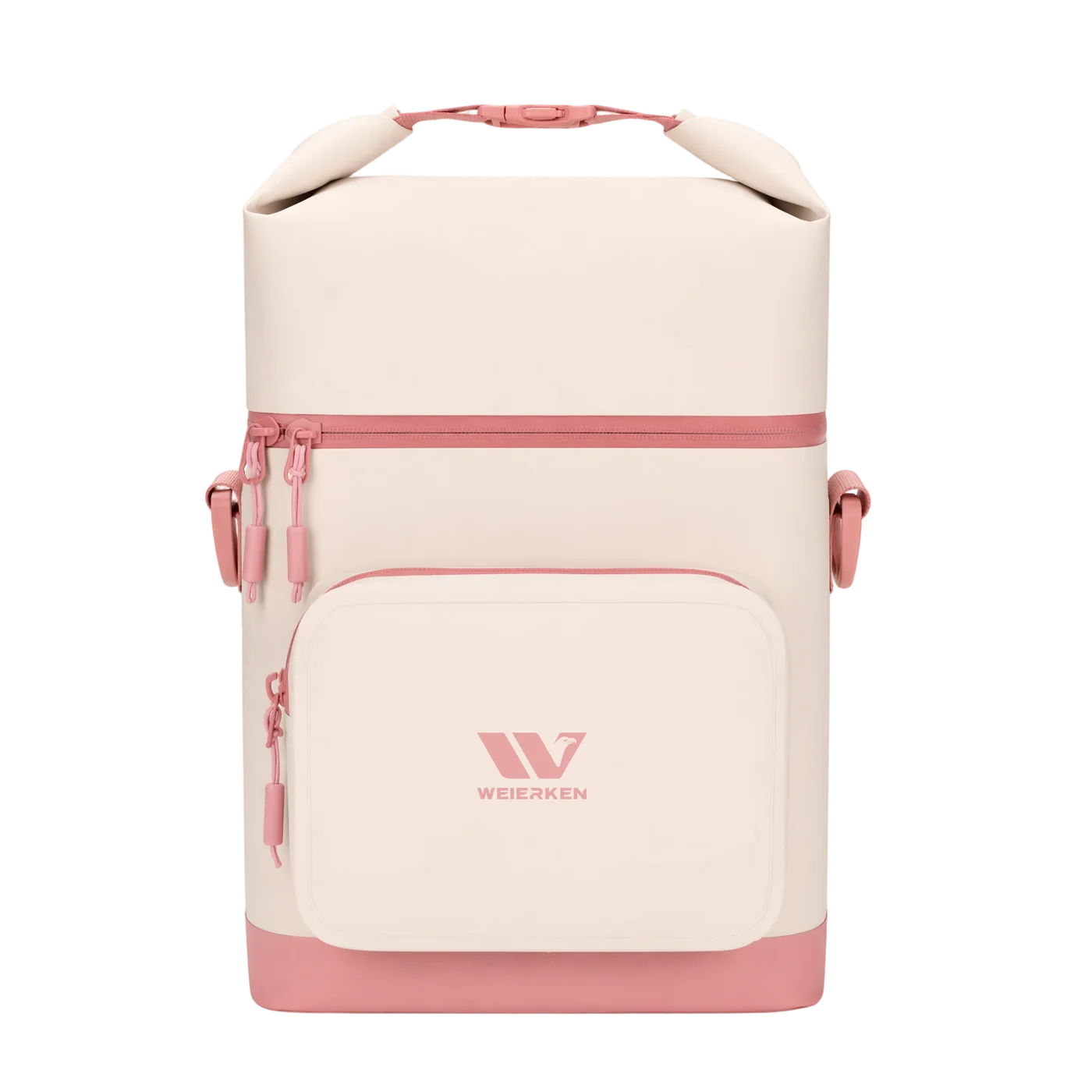
A cooler bag divider should solve an actual loading problem: keep bottles in position, separate containers or make one item easier to remove. Weierken develops compartments with the liner and bag dimensions. Before requesting extra partitions, show the load and distinguish simple organization from any thermal, leak or hygiene requirement.
Allocate the interior around the items
Illustrative lunch-cooler layout below, not a specification for an existing model. Use actual container dimensions when turning this into your project brief.
| Zone | Assigned contents | Divider request | Sample check |
|---|---|---|---|
| Left side | Two upright drink bottles | Retain the bottle area without blocking the opening | Remove one bottle while the lunch container stays in place. |
| Right side | One lidded lunch container | Provide the required clear footprint | Load and lift out the container without forcing its lid against the divider. |
| Side-wall positions | Identified cooling packs | Keep the planned positions available | Check that divider attachments do not occupy those spaces. |
| Alternative load | Larger container instead of bottles and small box | Review a removable-divider arrangement | Store the removed divider and confirm the new load still closes correctly. |
Draw the zones from a top view and identify front and back. A grid labelled ‘three compartments’ does not show which items fit, how they are removed or where the cooling packs go.
Choose fixed or removable around the use pattern
A fixed arrangement provides a defined layout; a removable one offers an alternative load but adds attachment and storage decisions. Compare both against the intended routine. In a removable concept, the divider should have an identifiable position and a clear refitting instruction, not simply sit loosely wherever the user places it.
Keep the liner review connected. Check access to corners, whether attachments snag a container and whether the divider shifts during the agreed loaded handling review. Do not approve the layout using an empty shell without the final liner and insulation.
Define what separation actually promises
A panel that organizes food boxes is not automatically a thermal or leakproof barrier. If the buyer needs separate temperature conditions or containment, define the required construction and verification specifically. Avoid using ‘hot and cold separation’ in marketing solely because a divider is visible.
Weierken’s compartment and insulation customization provides a development route for reviewing these requirements together. The practical benefit is a coordinated layout: dimensions, liner, divider and opening can be assessed against one loading plan instead of being approved as unrelated accessories.
Release the complete supplied configuration
Give every removable divider a part reference and identify which SKU includes it. Add its placement to the unit packing list and its removal to the care instructions where relevant. If the layout changes, repeat the same loading sequence so the effect is visible.
Send a top-view sketch, container measurements and your normal and alternative loads through the Weierken project form. State whether the divider is mandatory, optional or still a design question.
Frequently Asked Questions
Can dividers be offered as a paid optional set?
Define the base bag and accessory-set identifiers, supported sizes and packing contents. Ask Weierken to review fit and supply terms before promoting the set as available.
What if a buyer wants to change container suppliers after sample approval?
Compare the new containers’ full external dimensions and removal sequence with the approved load. Recheck the affected layout; similar nominal volume does not establish the same fit.
From brief to sample
Build the right bag for your collection.
Share the intended use, product format, quantity and destination market. Weierken can review the construction and sampling requirements with your team.
Discuss your bag project Explore OEM & ODM