
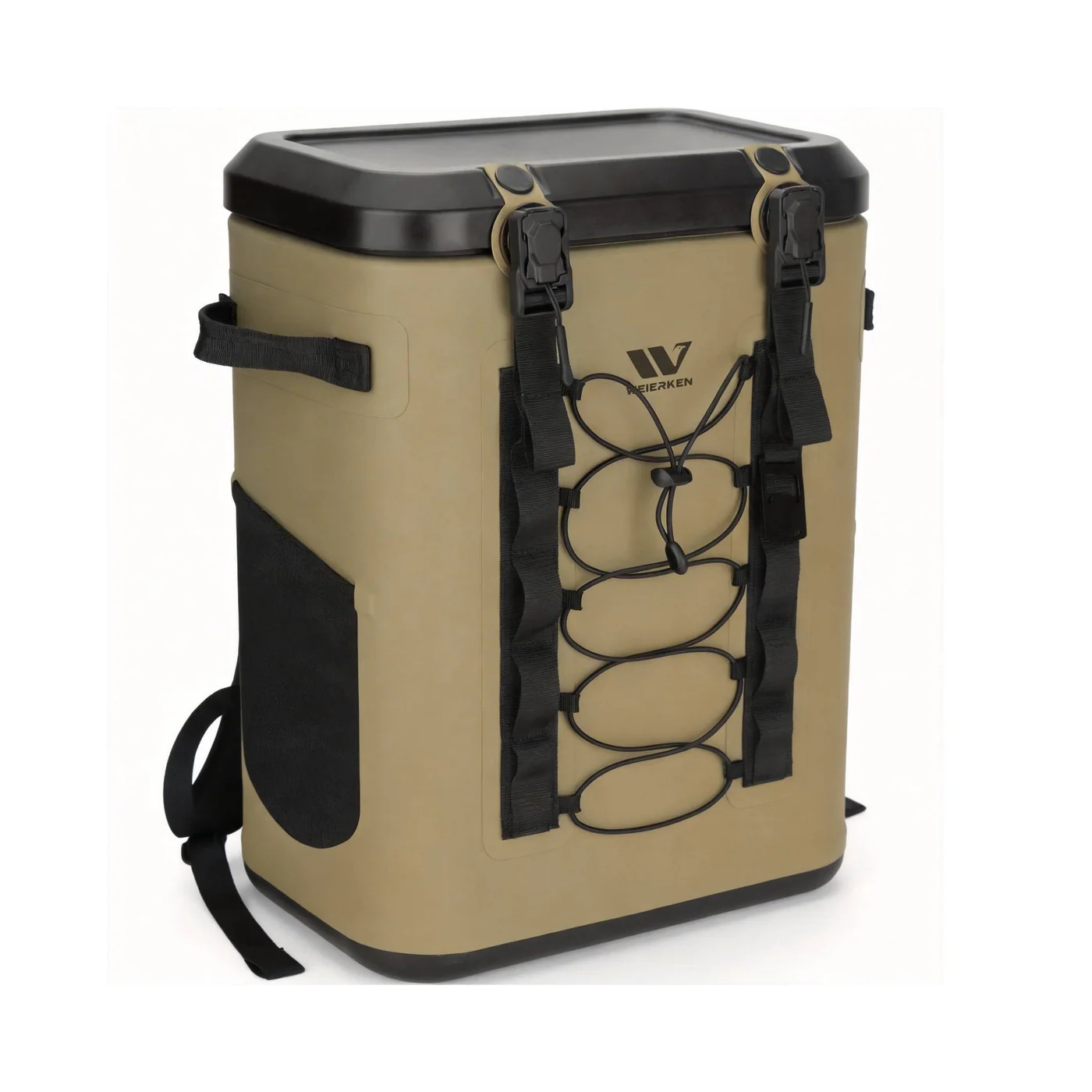
The best cooler bag opening for one routine can be awkward in another. Frequent drink access, carrying a full bag and removing a large food box place different demands on the closure. Weierken’s opening and bag-structure development can start with those actions, so your sample review compares complete arrangements rather than attractive hardware.
Define what the user does with the opening
Write a short sequence: load containers, close the bag, lift it, set it down and remove one item. Identify whether the bag is standing on a table or hanging from a shoulder when opened. Include the intended closing instructions; a sample cannot be judged fairly if reviewers use different procedures.
Compare candidates under one packed condition
Illustrative closure review: these are questions for prototypes, not performance rankings or claims about every closure in a category.
| Candidate | Access detail to review | Carrying detail to review | Approval evidence |
|---|---|---|---|
| Zipper opening | Pull access and corner travel with the target load | Closure and fabric stay clear of carry attachments | Video of opening and closing; identify the zipper and sample revision. |
| Magnetic lid arrangement | Alignment when the user releases the lid | Whether the intended carry arrangement needs a separate restraint | Loaded lift review using the prescribed closing and restraint procedure. |
| Roll-top arrangement | Space required to roll and fasten correctly | Closed shape and buckle position while carried | Photos showing the specified load and complete closing sequence. |
Do not label a lid secure simply because it stays closed on a table. Review it in the intended loaded condition using an agreed, appropriate method. Equally, do not infer airtightness or insulation duration from a closure name.
Resolve interference before approving the appearance
Check whether the largest container catches the opening, whether a strap crosses the pull and whether the packed load pushes into the closing area. Record the contact point on a photograph. A change to opening geometry may also change the usable loading space.
Weierken offers opening, carrying and insulation customization within the same bag-development scope. Use that connection to compare a revised opening and an alternative load arrangement before choosing a more complex closure by default. Keep the accepted operating instructions with the sample so future photography shows the correct use.
Separate usability approval from performance evidence
A successful access trial answers whether users can operate the sample as intended. It does not establish a thermal duration, exposure rating or transport guarantee. If those outcomes matter, identify the exact construction and method in a separate test brief. Review the insulation test brief before carrying a thermal claim into product copy.
When you request a closure review, send the item set, access routine and any restraint requirement. That gives Weierken a specific sample comparison to discuss.
Frequently Asked Questions
Can an existing Weierken model be the starting point for a closure change?
Our ODM service supports adaptation of existing designs. Identify the model and requested change, then have the affected opening, materials and carrying details reviewed before assuming the modification is straightforward.
Should left- and right-handed use be part of the brief?
Include it if your program needs both. Review pull access, lid movement and restraints with the intended users instead of making an ambidextrous claim from one demonstration.
From brief to sample
Build the right bag for your collection.
Share the intended use, product format, quantity and destination market. Weierken can review the construction and sampling requirements with your team.
Discuss your bag project Explore OEM & ODM