
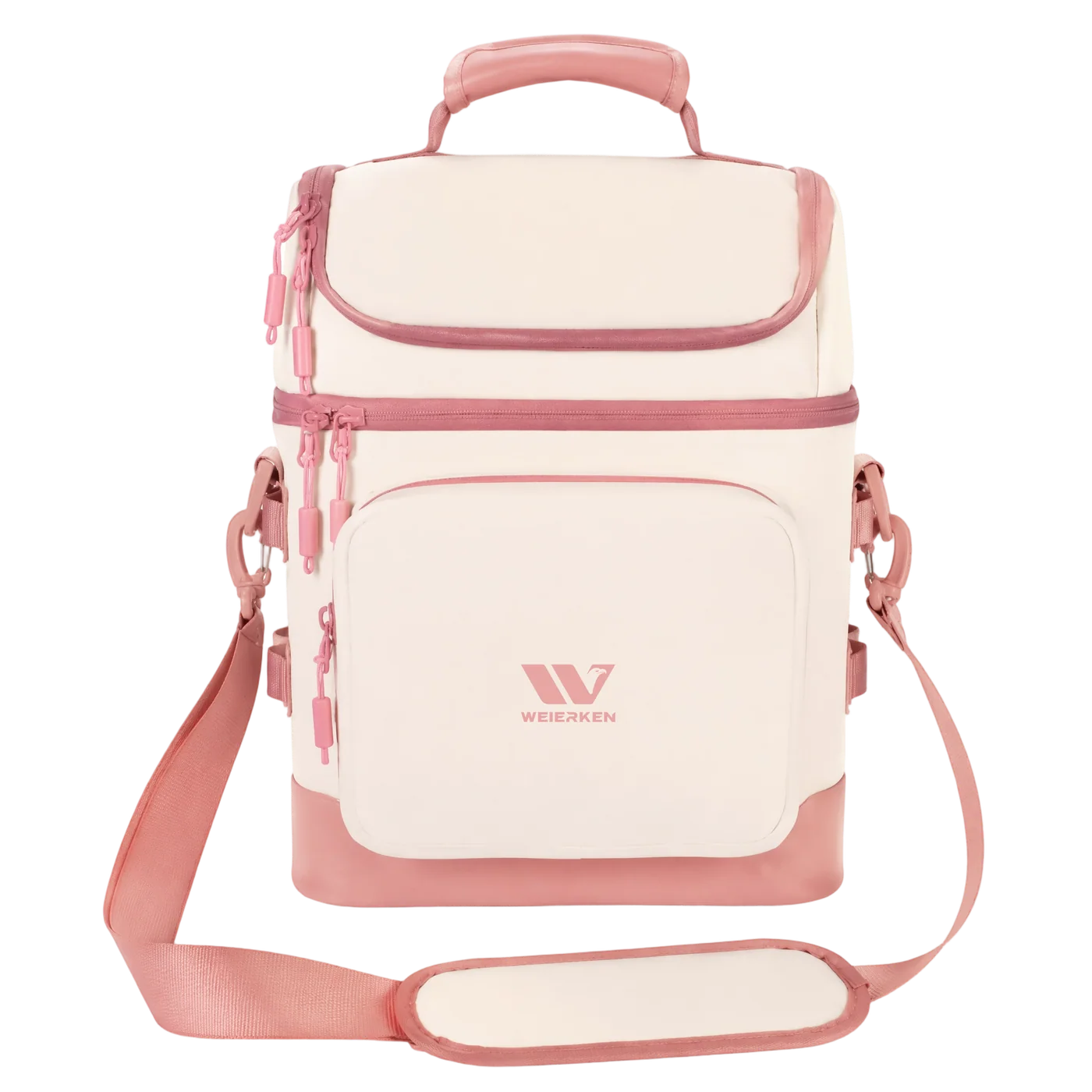
A care label is part of the product specification, not the last line of artwork to add before shipment. A private-label cooler can combine a coated shell, insulation, a liner, printed panels, hardware and removable straps. A cleaning method that suits one component may not suit the assembled bag.
For a Weierken project, prepare the care instruction alongside the approved sample. Identify the construction and the intended cleaning routine before turning either into a label, hangtag or online product claim. This guide is a practical development worksheet, not a statement that a particular cooler has passed washing tests.
Start with a component-by-component care map
List the outer surface, interior, seams, closure, logo treatment and removable parts. Beside each item, record which care questions remain open. Do not copy instructions from a similar-looking product: the same appearance can conceal different coatings, adhesives or insulation arrangements.
Use the C10 cooler reference to discuss a starting layout, then attach the actual project material list. If the sample has two compartments, review access to both. If an accessory can be removed, explain whether it should be removed for the chosen cleaning procedure and how it is reassembled.
Review a defined method on the development sample
Write down the proposed cleaning agent, application method, contact conditions and drying arrangement before the trial. The responsible product-development and testing teams should decide the appropriate conditions; this article does not prescribe a universal detergent, temperature or cycle count.
After the agreed evaluation, examine the areas that could change: print appearance, coating feel, liner corners, edge binding, closure movement and attachment points. Keep before-and-after photographs under similar lighting. A statement such as “easy to clean” is less useful than a record of what was done and what was inspected.
YETI’s Hopper owner’s manual separates cleaning, drying and prohibited methods for that specific product. It is an example of product-specific instructions, not permission to apply YETI’s method, construction or warranty terms to a Weierken cooler.
A filled instruction-review sheet
The entries below are illustrative decisions for a fictional development review. They are not an approved care method for C10 or a completed customer project.
| Issue | Illustrative review entry | Evidence before release |
|---|---|---|
| Interior cleaning | Evaluate a proposed wipe-clean method on sample A | Method record and photos of liner corners after drying |
| Printed outer panel | Check the selected cleaning method for visible print changes | Comparable before-and-after images |
| Removable strap | Explain removal and reattachment only if the approved design allows it | Photos of the actual attachment sequence |
| Storage | Write a drying and storage instruction matched to the reviewed construction | Inspection of the bag before it is closed and packed |
This makes the artwork discussion actionable. Instead of approving a generic washing symbol because it appears on another bag, the buyer can see which instruction is supported by the sample record and which point still needs resolution.
Keep the label, hangtag and product page consistent
Maintain one approved wording file with the model, revision and language version. Check that a retailer’s product page does not promise machine washing while the supplied instructions describe a different method. Avoid adding unsupported terms such as dishwasher safe, sterilizable or suitable for every cleaning chemical.
Artwork approval should include legibility at the intended printed size, placement where users can find it and a check that the label does not obstruct a closure or contact an important lining seam. Applicable labeling requirements depend on the product and destination market; use qualified advice for those requirements rather than treating this guide as legal approval.
Repeat the relevant review when construction changes
A change of lining, coating, logo process, closure or removable component can invalidate an earlier instruction. Put the proposed care wording into the same sample revision record as the construction change. Do not silently keep the old printed label when a replacement component has different care limitations.
For a quotation discussion, send the intended use, expected soiling, cleaning resources available to users and the proposed wording. Weierken can review those project questions alongside the material and insulation brief. Any test scope, production specification, MOQ, price and delivery commitment must be agreed for the actual project.
Procurement FAQ
Can we use one care label across a whole cooler collection?
Only when its instructions are appropriate for every construction covered by that label and the relevant evidence supports that use. Similar colors or silhouettes alone do not establish compatibility.
Should care wording be approved before the final logo artwork?
Coordinate both approvals. The label area, material and legibility can affect artwork layout, and a late care change should not be hidden in a separate file that production never receives.
Does a wipe-clean trial prove the bag can be machine washed?
No. Those are different methods and stress the assembled product differently. Do not extend a limited review into a broader washing claim.
What should be retained for a repeat order?
Keep the approved text version, model and construction revision, evaluation record, label artwork and placement photo together. Compare the reorder against that package before reusing the instructions.
Review your private-label cooler with Weierken
Send your project brief with the reference product, construction details, proposed care wording and intended order quantity. We can discuss the sample-review questions before those instructions become a permanent part of your product.
From brief to sample
Build the right bag for your collection.
Share the intended use, product format, quantity and destination market. Weierken can review the construction and sampling requirements with your team.
Discuss your bag project Explore OEM & ODM