
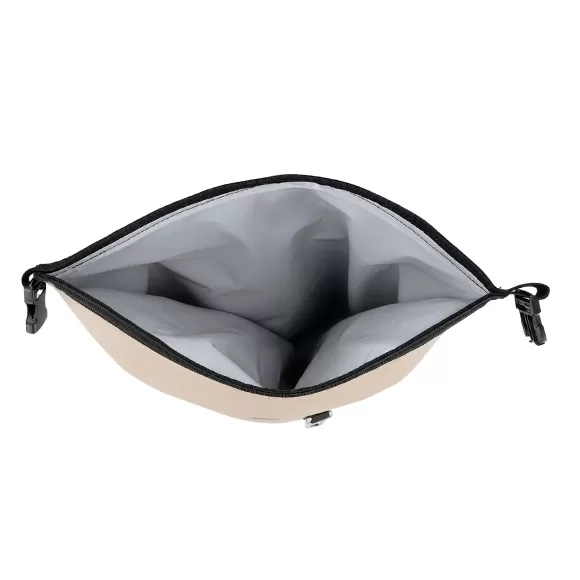
“Lightweight” is not a complete purchasing specification for a custom cooler bag. A buyer needs to distinguish the empty product, the accessories supplied with it and the load that a customer will actually carry. Otherwise, two samples can appear to meet the same weight target while containing different components.
For a Weierken development brief, use two linked records: a defined empty-bag configuration and a representative packed-load worksheet. Neither record is a safe working-load rating. Strength, comfort and thermal performance need their own agreed assessment.
Define what belongs in the empty-bag weight
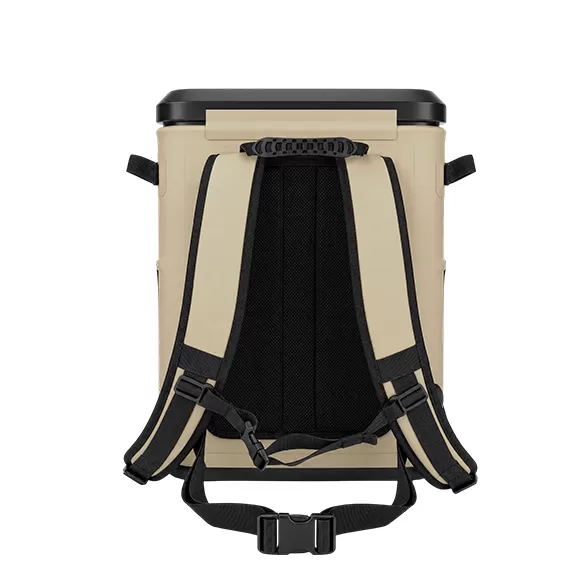
Specify whether the measurement includes the removable shoulder strap, divider, base insert, waist belt, care label and other supplied fittings. Keep retail packaging separate. If an accessory is optional, record its weight separately rather than silently removing it from one sample to reach a lower headline figure.
Use the same dry, unpacked configuration for comparisons. Remove shipping protection, empty the pockets and identify the sample revision. Record the scale reading and the measurement method together. For a purchase specification, agree the target and permitted variation after reviewing physical samples; do not derive either value from a photograph.
The distinction is visible in established retail specifications too. YETI’s Hopper Flip 18 product page separates product weight, dimensions and content-capacity statements. This is a useful information structure, not a specification or performance benchmark for a Weierken product. Our article uses no competitor weight as a promised target.
Calculate the packed load before reviewing portability
Start with the complete bag, then add the actual food or drink containers, cooling packs and accessories. A liter figure describes space; it does not identify how heavy a particular packing arrangement will be. Weigh filled containers rather than relying on the volume printed on their lids.
Illustrative arithmetic only: an empty bag of 1.20 kg, filled containers totaling 3.00 kg, cooling packs totaling 1.00 kg and accessories of 0.30 kg give a packed mass of 5.50 kg. These invented worksheet inputs are not measured C04 figures, a Weierken specification or a permitted carrying limit.
Repeat the calculation for the normal load and the heaviest intended use case. Then decide what needs separate physical review: handle access, strap adjustment, closure interference, balance and the agreed structural test conditions. A spreadsheet total alone cannot demonstrate that a bag is suitable for carrying that load.
A sample-review worksheet your team can reuse
| Record | Illustrative entry | Evidence to retain |
|---|---|---|
| Sample identity | Development sample A, revision 02 | Revision label and dated photographs |
| Empty configuration | Dry bag with all standard carrying straps; optional divider listed separately | Component checklist and scale photo |
| Normal contents | Named food containers, drinks and cooling packs | Individual masses and packed-layout photo |
| Comparison configuration | Same contents and components used for both sample revisions | Side-by-side worksheet; no hidden accessory changes |
| Acceptance decision | Review weight alongside carrying, closure and performance requirements | Recorded results against separately agreed criteria |
This table is a demonstration, not a customer case or factory test certificate. Replace each example with the measured configuration for your project. Keep raw readings so a later sample can be compared without reconstructing an old email conversation.
Review changes by component, not by a vague request to make it lighter
When the sample exceeds the target, ask which components contribute to the difference. Review the shell, lining, insulation, reinforcement, hardware and removable accessories as separate design choices. Request a proposed change with its likely implications, then verify the revised physical sample.
For example, removing a base insert changes more than the scale reading: it can change how the packed bag stands and how containers sit. Reducing a strap component may change adjustment or handling. Changing insulation requires a fresh look at the agreed thermal evaluation brief. None of those changes should inherit the previous sample’s approval automatically.
Do not accept an apparent improvement created only by weighing a different configuration. If sample A includes a detachable strap but sample B does not, list that difference before treating the result as a construction improvement. Our component-substitution guide explains how to keep such decisions attached to the approved specification.
What to send Weierken for a meaningful review
Send the intended application, preferred carrying method, contents list, reference dimensions and any measured sample weights you already have. Mark which accessories are standard, optional or excluded. Include your destination market and any specific verification requirements; a marketing phrase such as “ultralight” does not replace those details.
Use the C17 roll-top cooler reference and the Weierken product range to identify a starting platform, but do not assume that every listed component is mandatory for a new design. Record requested changes in one sample-revision specification. Ask for an updated component list and new measurements when the agreed construction changes.
Weierken can review the proposed configuration and sampling questions against the project brief. This guide does not promise a particular empty weight, MOQ, price, lead time or carrying capacity. Those details belong to the agreed product specification and quotation.
Procurement FAQ
Should the shoulder strap be included in empty weight?
If it is part of the standard product supplied to the customer, include it in the standard configuration or disclose clearly that it has been excluded. For an optional strap, retain a separate accessory reading and show the combined configuration where relevant.
Can two cooler bags of the same capacity be compared by empty weight alone?
No. Confirm the capacity method and included components first, then compare the required functions and verified performance. A lower reading does not by itself establish equivalent insulation, durability or usability.
Does the packed-load worksheet establish the bag’s maximum load?
No. It identifies the mass of a specific contents arrangement. A working-load claim needs a suitable assessment of the finished construction and intended use, with agreed test conditions and acceptance criteria.
What should trigger a new weight measurement?
Repeat it when the shell, lining, insulation, reinforcement, carrying components, size or standard accessory set changes. Record the new revision and use the same measurement configuration so the comparison remains meaningful.
Discuss your cooler-bag specification
Send Weierken your project brief with the normal contents list, standard accessories and target empty-bag configuration. Include expected order quantity and reference files so the discussion can address a real product rather than an undefined “lightweight cooler.”
From brief to sample
Build the right bag for your collection.
Share the intended use, product format, quantity and destination market. Weierken can review the construction and sampling requirements with your team.
Discuss your bag project Explore OEM & ODM