
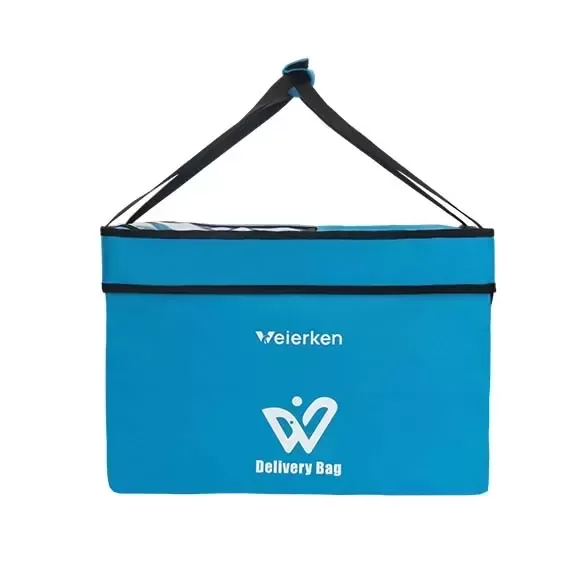
A removable frame can help define a delivery bag’s working shape, but the buyer must also plan how operators install, remove and store it. The bag is not ready for fleet use if staff cannot identify the correct orientation or if a frame interferes with cleaning. Review the frame as part of the complete product and its operating instructions.
Define which parts are removable
List panels, rails, connectors and fasteners separately. State whether removal is intended for first setup, routine cleaning, storage or repair. A frame that can be disassembled during development is not necessarily designed for daily operator removal.
Identify any tool required and whether small loose parts can be lost. Ask the factory to show the intended assembly order instead of expecting users to discover it from the finished sample.
Check fit with the intended containers and carrier
Install the frame, load the actual order packaging and close the bag. Review where hard edges contact the liner and whether connectors reduce usable space. A nominal body dimension does not tell the buyer how much room remains around the installed structure.
If the bag is secured to a vehicle, evaluate that arrangement separately. An internal frame is not automatically an approved carrier mounting system. Do not use its presence as proof of load restraint or road-use suitability.
Review cleaning and reassembly
Follow the proposed removal steps and inspect hidden surfaces. Check whether the operator can access and dry the areas around supports before reinstalling them. Agree a cleaning process compatible with both the frame and bag materials.
After reassembly, repeat the loading and closure checks. A reversed panel or unseated connector can change the finished shape. Clear orientation marks or an assembly illustration may prevent that error more effectively than a general instruction to install correctly.
Control replacement compatibility
Record the frame drawing, component references and bag revision. Confirm replacement availability, quantities and packing commercially before describing parts as supplied or interchangeable. Similar-looking frames may not fit a revised panel arrangement.
Include the frame in the carton plan. A packaging change that moves components loose into the liner should be checked for abrasion and receiving confusion before bulk packing is approved.
Purchasing worksheet
Use this as a project worksheet, not a completed test report. Swipe the table on a small screen.
| Stage | Required detail | Review record |
|---|---|---|
| Assembly | Part list, orientation and tools | Step-by-step photos |
| Use | Actual load and carrier arrangement | Clearance and closure review |
| Replacement | Part references and bag revision | Confirmed compatible version |
Buyer FAQs
Does an internal frame make the bag a vehicle-mounting system?
No. Internal support and external mounting require separate assessment.
Are replacement frames automatically included?
No. Confirm availability, compatibility, quantities and commercial terms in the order scope.
Explore our delivery bag manufacturing alongside the project worksheet below.
Prepare your Weierken project brief
Send the loading arrangement, cleaning routine and expected assembly frequency. Weierken can review frame access and instructions before the product is released to a fleet.
Related guidance: vehicle fit, spare-part planning. Send your project details to Weierken.
From brief to sample
Build the right bag for your collection.
Share the intended use, product format, quantity and destination market. Weierken can review the construction and sampling requirements with your team.
Discuss your bag project Explore OEM & ODM