
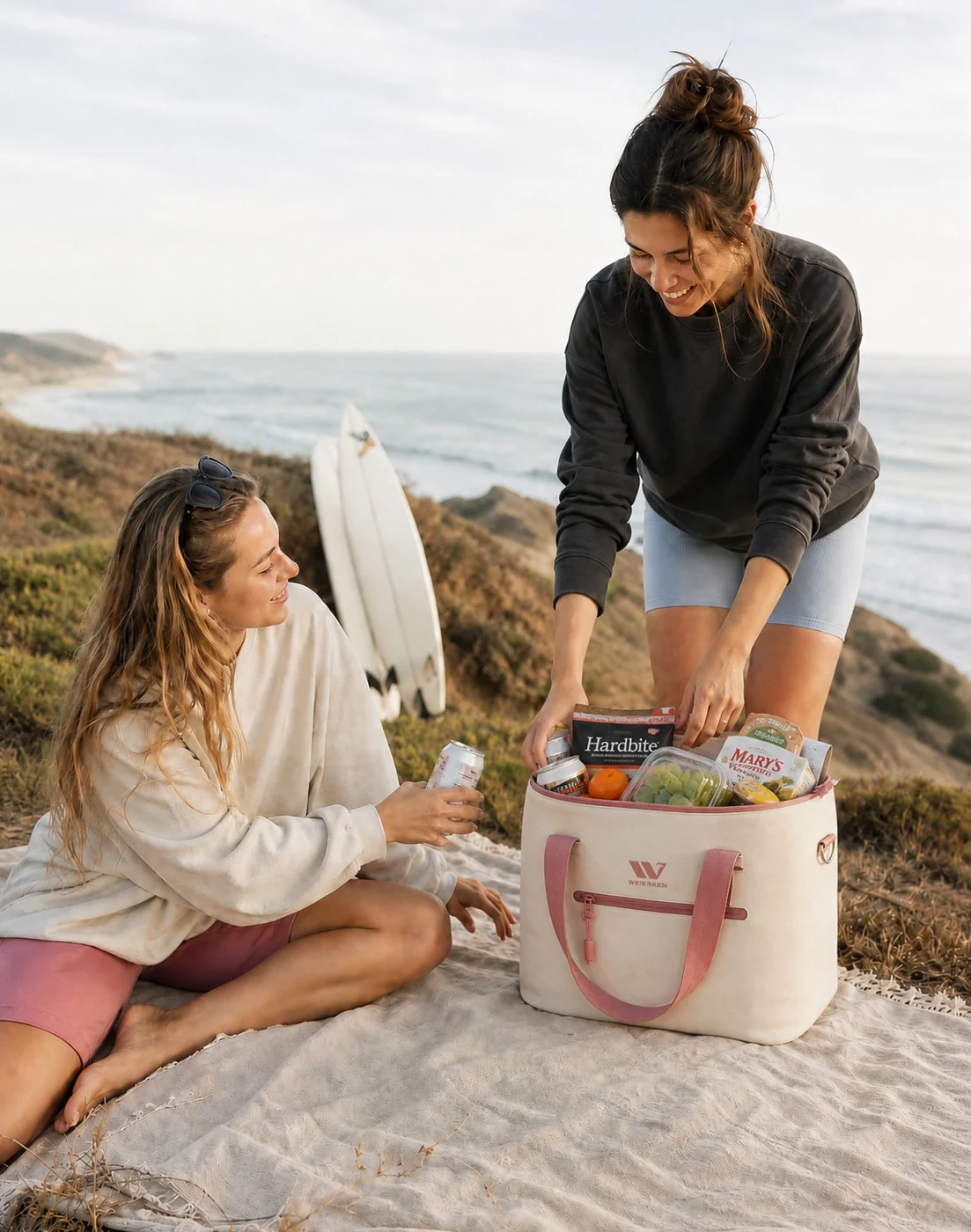
A claim such as ‘keeps cool all day’ is not a useful purchasing specification unless the conditions and endpoint are defined. Weierken develops cooler bag insulation, lining and closures; a project test should evaluate that exact combination. Start with the journey you want to represent, then agree a repeatable setup before comparing results.
Separate the customer routine from the laboratory setup
Describe what the bag carries, how often it opens and the environment the program needs to represent. A sealed transport period and repeated access at a picnic should not be merged into one unexplained result. The responsible reviewer must define any safety-related limits; this guide does not prescribe food-safe temperatures or storage times.
A filled comparison brief
Illustrative protocol outline for comparing two prototype constructions. It is not a validated test method, test report or promised performance.
| Control | Example instruction | Record with the results |
|---|---|---|
| Sample identity | A uses construction R01; B uses R02; identify the changed insulation detail | Sample labels, drawings and setup photos. |
| Contents | Use the same specified container set in the same positions | Item list, quantities and initial conditions. |
| Cooling medium | Use the same identified packs, quantities, placement and preparation | Pack identification and starting condition. |
| Opening routine | Separate a closed test from a repeated-access test | Actual opening timestamps and duration for each run. |
| Environment and sensors | Agree ambient conditions, sensor positions and logging interval before testing | Ambient record, sensor map and measurement information. |
| Endpoint | Buyer and responsible technical reviewer define the criterion before the run | Criterion, complete time record and deviations, including early stops. |
The open technical values must be set by the responsible reviewer before execution. Filling them with arbitrary numbers would make the document look complete without producing a meaningful test.
Ask for the record behind the headline
Keep raw time records, setup photographs and deviations with the summary. If the bag was opened unexpectedly, the load was changed or the run stopped early, keep that visible. Do not select one favorable reading and omit the conditions that produced it.
Weierken’s insulation and structure development gives you several design variables to investigate. Change one clearly identified variable where practical, then compare like-for-like evidence. A different lid, liner or usable volume may change what the comparison actually demonstrates; connect those changes to the sample revision record.
Publish only the claim supported by the final configuration
Before using a result in a catalogue, match the report to the final size, materials, closure and instructions. State the conditions needed to interpret the claim. If the product changes, review whether the evidence still applies instead of carrying the old headline forward automatically.
Include your intended use, proposed comparison and required evidence when you discuss cooler bag development with Weierken. This keeps a marketing ambition separate from an approved performance statement.
Frequently Asked Questions
Can we commission an independent laboratory test?
Include that requirement in the project brief and agree the sample identity, method, responsibility and commercial arrangements before commissioning. Keep the laboratory’s scope and limitations with the result.
Can a result for one size be used on the entire collection?
Do not assume that it covers other configurations. Identify the sizes and constructions you want to claim, then have the responsible reviewer assess the necessary evidence for that scope.
From brief to sample
Build the right bag for your collection.
Share the intended use, product format, quantity and destination market. Weierken can review the construction and sampling requirements with your team.
Discuss your bag project Explore OEM & ODM