
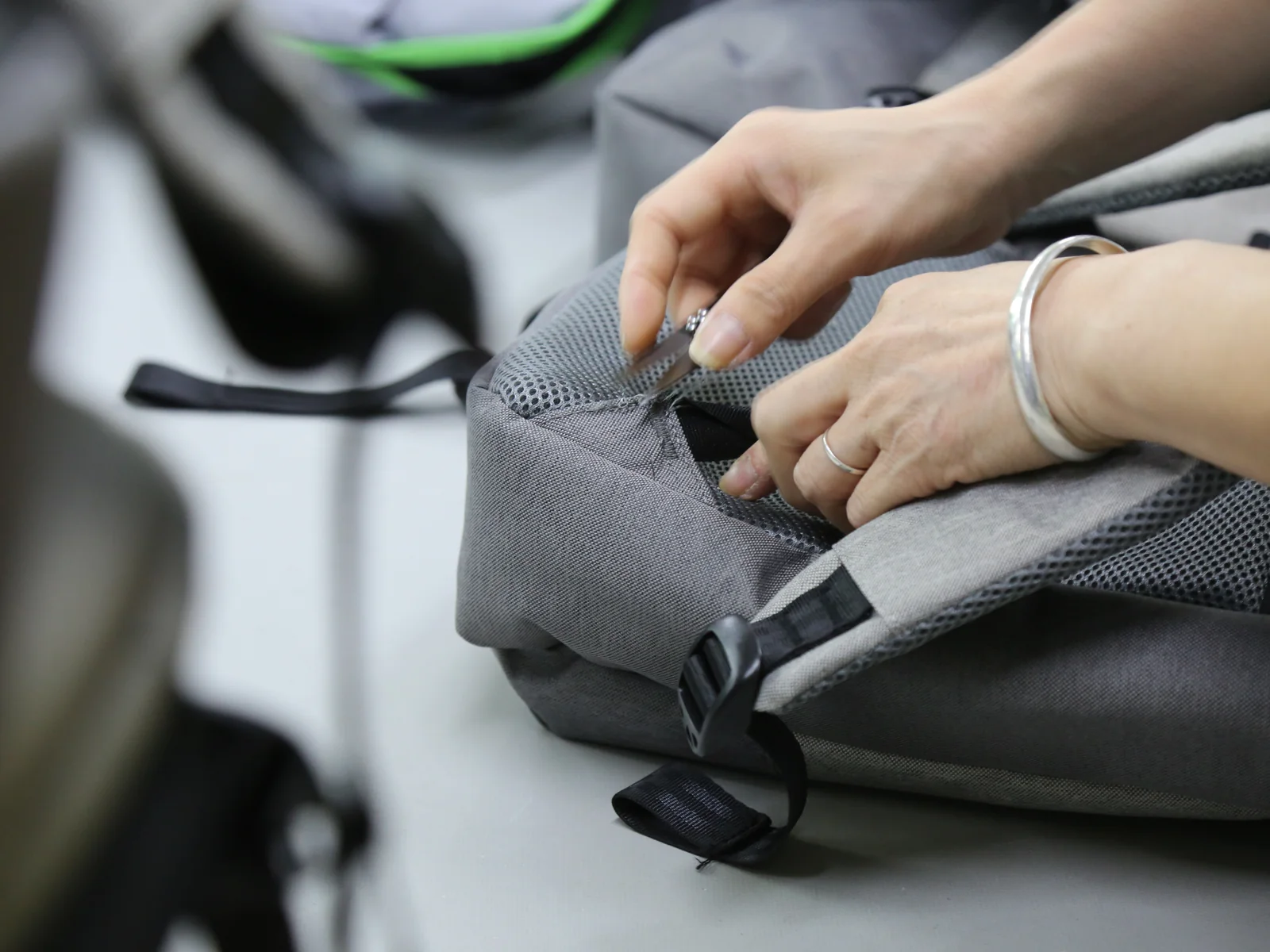
A cooler bag sample can look ready while key production decisions remain open. At Weierken, design, sampling and factory production are connected services. A useful approval pack makes that connection explicit: it identifies the exact sample, records accepted details and prevents a prototype exception from being mistaken for the bulk specification.
Start with the load the customer will actually carry
Use the intended containers, bottles and cooling packs, not an empty sample alone. Check loading, access, closure and carrying as a sequence. Photograph the load before and after it goes into the bag, so a later review can repeat the same arrangement.
Tie the sample to one drawing revision and materials list. Label any temporary zipper, substitute lining or unapproved logo. A physical sample can be a structure reference without being an approved color or material reference.
Use an approval sheet that separates decisions
Illustrative sample review below: the statuses describe a fictional development review, not a completed Weierken order.
| Area | Example review outcome | Release condition |
|---|---|---|
| Load and opening | Target container set can be loaded and removed | Attach the loading photos and container list to R03. |
| Shoulder strap | Attachment positions accepted; temporary buckle fitted | Keep hardware approval open until the specified buckle is reviewed. |
| Outer color | Construction sample is black; launch color is navy | Approve a labeled navy physical reference separately. |
| Logo | Placement drawing accepted; physical application not reviewed | Review the branded panel before signing the branding item. |
| Packing | Divider included in the design; unit packing not agreed | Issue the complete selling-unit checklist before packing release. |
Use ‘accepted’, ‘change requested’ and ‘pending evidence’ as separate states. An overall ‘approved’ stamp on this example would hide the open hardware, color, branding and packing decisions.
Move from review to a production reference
Weierken’s OEM & ODM process includes sample review before the product and commercial terms are finalized. Give that review one buyer-side approver and one consolidated response. Link comments to photographs or drawing details, and separate mandatory corrections from optional ideas for a future version.
When a correction is requested, use the revision sheet approach rather than overwriting the original notes. Before release, match the accepted sample, drawing, bill of materials, artwork and packing list. Record what each reference controls; the bag sample should not silently override a separately approved label file.
Any insulation or exposure claim needs its own agreed evidence. A sample approval for fit and appearance does not create a tested performance claim. Include the required verification in the project scope when you discuss the sample with Weierken.
Frequently Asked Questions
Who should approve the sample when our designer and purchasing team have different roles?
Name the decision owner for design, commercial terms and final release. Consolidate their decisions into the same pack so a design approval is not mistaken for authority to start production.
Can an urgent launch date replace an unresolved sample approval?
No. Give Weierken the target date and ask which decisions control the schedule. Agree the actual release and production plan without treating urgency as evidence that an open detail is acceptable.
From brief to sample
Build the right bag for your collection.
Share the intended use, product format, quantity and destination market. Weierken can review the construction and sampling requirements with your team.
Discuss your bag project Explore OEM & ODM